
Following an examination and discussions held in the aftermath of the United States' decision to withdraw from dozens of international organisations, Israel's Minister of Foreign Affairs, Gideon Sa'ar, has decided that Jerusalem will immediately sever all contact with several United Nations agencies and international bodies, citing what the government described as persistent bias, politicisation and actions hostile to Israel.
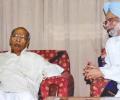
'Narasimha Rao asked me why China was doing so well in attracting foreign investments and I gave my frank opinion.' 'I told him that giving thrust to exports had to be a national effort.' 'But in India, the system was very centralised in the Government of India and the state governments had no role to play.'

The UN Economic and Social Commission for Asia and the Pacific said ndia's growth has been slowing down since 2011, mainly on account of 'severe' monetary tightening by the Reserve Bank of India.

The growth outlook is higher than the Reserve Bank's projection of 8 per cent but at the lower end of the finance ministry's forecast of 8.25-8.75 per cent.

Launching the annual survey of the UN Economic and Social Commission for Asia and the Pacific, Commerce and Industry Minister Kamal Nath said the government has started a 'revolution' in farming sector by waiving farm loans of Rs 60,000 crore. He said improving the agriculture sector is an important challenge for the Asia-Pacific region & deserves a 'serious response'. The report would open up solutions to the socio-economic issues across the region Nath said on the occasion.
"India's economy has entered into a 'new phase of high growth', with expansion of nine per cent forecast for 2008, buoyed by investment and savings amid increasing productive capacity," UN Economic and Social Commission for Asia and the Pacific (UN-ESCAP) survey released in New Delhi on Thursday said. Indian economy is expected to grow by 8.7 per cent during 2007-08 and many think-tanks expect moderation in growth in the coming fiscal.
The urban population of the Asia-Pacific region has been growing at the fastest rate in the world over the past 15 years, according to the Statistical Yearbook for Asia and the Pacific" released yesterday by the UN Economic and Social Commission. "This growth is having a knock-on effect," said Pietro Gennari, chief of ESCAP's Statistics Division. "We're seeing more and more people living in slums and also a negative effect on people's ability to access clean water.
Nobel laureate Amratya Sen has been conferred Lifetime Achievement Award by UNESCAP as part of its 60th anniversary celebrations.
A staggering $600 billion a year is needed for infrastructure development in the entire Asia-Pacific region, the United Nations has estimated.
Though foreign banks outperformed domestic banks in quality services, they could not match the latter as public sector banks reigned supreme on the strength of their superior reach.
India transformed from a moderate to low indebted country with a fall in debt-GDP ratio to 20 per cent and foreign debt was slated to be at $102.3 billion in March 2003, a United Nations survey said on Thursday.

India has declined assistance offered by the United Nations of its integrated supply chain for COVID19-related material, saying the country has a "robust system" to deal with the required logistics, a spokesperson for UN Secretary General Antonio Guterres said.
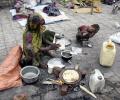
India has halved incidence of poverty from 1990s

Sri Lanka and southern India could continue to experience higher than normal rainfall and this could cause further flooding, particularly urban flooding, in certain locations, the report said.

South and South-West Asia could witness an economic growth of 5.3 per cent in 2015, which will be a four-year high.
 © 2026 Rediff.com - Advertise with us - Disclaimer - Privacy Policy - Sitemap - Feedback - About us - Terms of use - Grievances