
Led by the country's biggest lender State Bank of India (SBI), public sector banks logged a record cumulative profit of Rs 52,603 crore in the third quarter of the current fiscal, reflecting an 18 per cent year-on-year growth.

Six banks that reported their quarterly business updates for the October-December (Q3FY26) quarter on Friday recorded double-digit growth in their loan books compared with a year ago. Deposits also posted healthy growth during the period.
'Raising the entire amount in one go may not be prudent, given the market dynamics.'
State Bank of India-led public sector banks posted a record cumulative profit of Rs 49,456 crore in the second quarter of the current fiscal, reflecting a 9 per cent year-on-year growth despite two lenders reporting a decline. All 12 public sector banks (PSBs) together made a profit of Rs 45,547 crore in the September quarter of FY25.

Bad loans in the agriculture sector remain elevated, with several public-sector banks (PSBs) reporting higher slippages in the April-June quarter of FY26. For many banks, non-performing assets (NPAs) in farm lending were 5 per cent or more, with some nearing double digits.'

Bank of Baroda, a state-owned bank, in its quarterly update on Friday said its domestic deposits grew 9.23 per cent year-on-year (Y-o-Y) in October-December (Q3FY25) at Rs 11.65 trillion, while advances increased 11.76 per cent Y-o-Y at Rs 9.63 trillion, outpacing deposit growth during the period. Domestic retail advances grew at a robust 19.5 per cent Y-o-Y to Rs 2.43 trillion.

At a time when the finance ministry is focusing on addressing employee grievances, the number of employees in most public-sector banks (PSBs) has declined over the last three financial years.
Each employee is generating more business than before -- driven by cost rationalisation, digital adoption, and better resource utilisation -- signalling a stronger foundation for sustainable growth and profitability.
State Bank of India (SBI), the largest lender in the country, has launched a share sale to institutional investors to raise upto Rs 25,000 crore, the biggest qualified institutional placement (QIP) so far by an Indian firm, and has set a floor price of Rs 811.05, which is at a 2.5 per cent discount on Wednesday's closing price.

Privately, many bankers admit their immediate goal is not growth but slowing the erosion of Casa deposits, reveals Tamal Bandyopadhyay.

'It has remained around 38 per cent over the past four to five quarters.'

Public-sector lenders Indian Overseas Bank (IOB) and Uco Bank are likely to raise funds through qualified institutional placement (QIP) next month. Punjab & Sind Bank is likely to follow suit later this financial year to meet the public shareholding norm of 25 per cent. When a public-sector unit raises funds through QIP, the money goes to the company because it involves issuing new shares whereas in the case of offer for sale (OFS), the money raised goes to the government because its shares are sold.

Net NPAs increased to Rs 36,260 crore in the December quarter from Rs 34,843 crore in September and Rs 33,116 crore in December 2023, observes Tamal Bandyopadhyay.

"The amount payable to the company at the time of booking is Rs 95,000, and the bank would lend this money to the applicant at a less than 10 per cent interest," said S K Goel, chairman and managing director of UCO Bank. He said the scheme offered by UCO was different from that of the State Bank of India, in the sense that UCO would lend any amount less than Rs 95,000 to the customer depending on their need.

The Union Finance Ministry on Tuesday said that aggregate business of public sector banks (PSBs) has shown strong growth of 11 per cent in the first half of the financial year 2024-25 (H1FY25) to touch Rs 236 trillion. The operating and net profit were also robust. At Rs 1.5 trillion, operating profit grew by 14.4 per cent year-on-year (Y-o-Y) while the net profit saw an impressive 25.6 per cent jump at Rs 85,520 crore in the first half of FY25.

An obscure Indian bank has been an unlikely beneficiary of Western sanctions against Iran, handling billions of dollars from frozen oil payments that boosted its interest margins, but is now having to prepare itself for life after the windfall.

Kingfisher Airlines has objected to being identified as a 'wilful defaulter' by state-run UCO Bank.

United Bank of India has already declared Kingfisher a wilful defaulter while State Bank of India, Punjab National Bank and IDBI have initiated such a move.

As per RBI guidelines, a wilful defaulter tag would be given if it is found that a loan taken is diverted for some other use rather than for which it was availed.
The finance ministry is in favour of extending the August deadline for public sector banks (PSBs) as well as insurance companies to increase their minimum public shareholding (MPS) to the mandated 25 per cent, said a senior government official. "The election results will determine the course of action. "Most likely, those who did not receive an extension to meet the minimum shareholding norm will be granted one," the senior government official said.

UCO Bank will not allow Kingfisher Airlines to be represented by lawyers in the wilful default case hearing.
Barely a month before its scheduled Rs 200 crore IPO, UCO Bank on Monday signed a memorandum of understanding with the Life Insurance Corporation of India to market the latter's insurance schemes from its branches.
Following the footsteps of its peers, the Kolkata-based UCO Bank has priced its Rs 240 crore initial public offer at an attractive Rs 12 a share to woo retail investors.

The Union finance ministry will meet CEOs of public sector banks to discuss issues related to cybersecurity in the wake of the Rs 820 crore (Rs 8.2 billion) fraud that hit Kolkata-based UCO Bank last month.
Public sector lenders Dena Bank and UCO Bank on Tuesday ruled out their merger with market leader State Bank of India.Dena Bank, on the other hand, debunked the report saying these were "not correct" and it had no knowledge if SBI had any discussions with others about any merger proposal.

At least 13 candidates are in the race for the position of managing director and chief executive officer (MD & CEO) of Punjab National Bank (PNB), the second-largest public sector bank (PSB), according to multiple sources familiar with the matter. "Among the candidates, some are executive directors (EDs) and managing directors in major PSBs. "Financial Services Institutions Bureau (FSIB) will conduct the interviews next month," said a source.
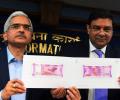
While its deposits from Iran accounts have come down from a peak of around Rs 25,000 crore to Rs 2,200 crore, it's been offset by the bank receiving almost Rs 24,000 crore in deposits post note ban.

To consider revising interest rates after RBI's review.

Most lenders that have reported their April-June business update posted slower growth in deposits sequentially as compared to the loan growth in the April-June quarter of 2024-25 (FY25). Current and savings account (CASA) deposits continue to face pressure. Private-sector lenders YES Bank, Bandhan Bank, and RBL Bank saw their deposit growth contract by 0.5 per cent, 1.5 per cent, and 2 per cent, respectively.
UCO Bank has reduced interest rates on term deposits for higher maturity periods by 25 basis points effective from December 1.
Within days of reducing interest rates on domestic term deposits, city-based UCO Bank on Friday announced a downward revision on interest rates on its major mid-market products that would be effective from November 1, 2003.

Bank issues public notice with photograph in Reid & Taylor default case.
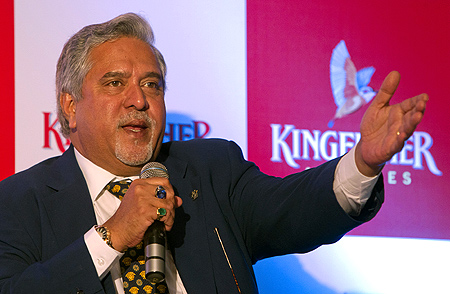
Grounded Kingfisher Airlines has written to UCO Bank wanting to know the basis of attaching the 'wilful defaulter' tag on the carrier.
The Kolkata-based UCO Bank will refund nearly Rs 4,000 crore (Rs 40 billion) to applicants who had bid for the bank's initial public offering last month, V P Shetty, chairman and managing director, UCO Bank, said on Friday.

To check digital frauds, the government has disconnected 70 lakh mobile numbers so far involved in cybercrime or financial frauds, Financial Services Secretary Vivek Joshi said on Tuesday. Emerging from a meeting to discuss issues related to financial cyber security and increasing digital payment fraud, Joshi, who chaired the meeting, said banks have been asked to strengthen the system and processes in this regard. More such meetings would take place, he said, adding the next meeting is scheduled in January.

'Probably revised guidelines will come, and then the real picture will emerge.'

>It's not easy to predict the market. But there are at least two positive factors to back the PSU banks, explains Tamal Bandyopadhyay.

'We are also conducting ongoing training and grooming at the branch level to pre-empt such cyberattacks.'
 © 2026 Rediff.com - Advertise with us - Disclaimer - Privacy Policy - Sitemap - Feedback - About us - Terms of use - Grievances