
India should become a middle-income country and then push to make INR (rupee) a hard currency, and till then, it must promote the settlement of global trade in the local currency, think tank GTRI said on Sunday. Global Trade Research Initiative (GTRI) said that transforming a currency into a hard currency is a complex process that hinges on several pivotal factors. Firstly, economic stability is paramount; a country must exhibit low and stable inflation, consistent growth, and a balanced trade environment.

Rs 1,000 now buys $13.5 against $14 a year ago.

An undervalued rupee puts pressure on the monetary system, while a rising currency hurts exporters. Is there a middle ground? Ask China.

George Soros, who is in the eye of the storm over his remarks against Prime Minister Narendra Modi on the Adani issue, is an Hungarian-born American financier, philanthropist, and activist whose success as an investor made him one of the wealthiest men in the world. He is also known as a powerful and influential supporter of liberal social causes. In a speech at the Munich Security Conference on Thursday, the billionaire philanthropist said he believes the turmoil at Gautam Adani's business empire may weaken Prime Minister Narendra Modi's hold on the government, a statement which was strongly contested by the BJP as an attack on Indian democracy.
We need to deliver strong 8 per cent plus GDP growth and near 20 per cent earnings to justify and fulfil expectations.
The country is likely to miss the export target of $160 billion for 2007-08 by at least $15 billion due to the strengthening rupee, an Assocham study has said.

India's politicians need to do a better job of managing the economy: Inflation control, productivity improvement, etc, asserts T N Ninan.

If there was one event that made the month of August stand out, it was a strengthening of the dollar index to levels last seen only 20 years ago, as the Federal Reserve dispelled all doubts about its intention to continue raising interest rates. Predictably, most currencies suffered against the US unit, with the bulk of the losers belonging to the emerging markets pack. Amid the volatility, the rupee, however, has displayed significant resilience and fared much better than most of its peer currencies.
India's rupee is likely to remain under pressure due to high prices of crude oil and other commodities, and may stabilise at around 79-80 against the US dollar in the near term, say experts amid limited headroom available with the Reserve Bank to check the weakening of the domestic currency. The currency has slumped over 5 per cent this year after Russia's invasion of Ukraine sent international crude oil prices soaring to a decade high. On Monday, rupee ended at a fresh all-time low of 78.34 (provisional) against the US dollar.
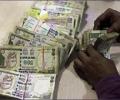
The rupee fell to an all-time low of 61.21 per dollar, forcing the Reserve Bank of India to intervene to stabilise the currency.

'The rupee has lost value against all other major Asian currencies, including that of Bangladesh and, of course, China.' 'Why should this be the case when the Indian economy has been growing faster than these economies, other than China?'

The Indian rupee, however, saw the largest bullish bets in one year as worries about inflation eased.

The partially convertible rupee closed at 60.30/31 per dollar compared with 60.28/29 on Friday.
.jpg)
Most Asian currencies weakened versus the dollar with the Thai baht and Philipine peso sliding on disappointing economic data.
The currency market won't care for our moans, groans, cries and sighs. The rupee will find its own level, explains Tamal Bandyopadhyay.

'... as has been happening in the last three weeks, then the foreign exchange reserves will not be comfortable to ensure that the rupee does not fall drastically.'

India's economy is in much better shape to weather tighter U.S. monetary policy.

The rupee's strength against its competitor could come to haunt exporters.

The ones who came more recently were clutching the green cards that gave them an escape hatch through which to return to green pastures: Arvind Panagariya, Raghuram Rajan, Arvind Subramanian and other perfectly honourable gentlemen like them, points out T N Ninan.
The Indian rupee is down nearly 2 per cent against the US dollar since the beginning of January 2019. Experts attribute the Indian rupee's relatively poor performance to a sharper-than-expected fall in economic growth in India.

Here's this week of photos that prove we live in a mad world.

10 photos that show it's an odd, weird world out there

The majority in the markets believe that a September lift-off is likely.

If you are travelling internationally in the next two months, it's a good time to exchange your currency.
China's CSI300 stock index shed 1.1 per cent, hitting a five-week low, while shares of Hong Kong-listed Chinese companies sagged 0.9 per cent.

The reason for the stickiness in bond yields can be many, but the most responsible is the liquidity deficit stance taken by RBI, says Anup Roy.

After the advent of the US Affordable Care Act, popularly known as Obamacare, US insurance companies plan to encourage medical tourism.
 © 2026 Rediff.com - Advertise with us - Disclaimer - Privacy Policy - Sitemap - Feedback - About us - Terms of use - Grievances