
To prevent companies from submitting unrealistic quotes to bag project contracts across industries, the government is planning to soon roll out a mechanism to curb irrational bidding.

With the finding of both black boxes of the plane, it would be easy for investigators to ascertain the cause of the crash.
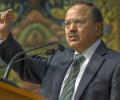
The government on Thursday reappointed former IPS officer Ajit Doval as the National Security Adviser (NSA), according to an official order.
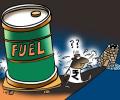
India's climate change goals are turning combustible. On the one hand, a protracted dispute between the government and manufacturers over subsidies threatens to slow the pace of electric vehicle (EV) sales. On the other hand, repeated assertions by different arms of the government over banning sales of new fossil fuel-fired vehicles have queered the pitch for energy investments. Before we address the issue of the recommended diesel vehicle ban in the recent report on energy transition, issued months before the next round of global climate talks begin in Dubai in November, let's look at what's at stake.
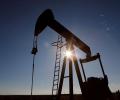
Former oil secretary Tarun Kapoor, present and former chairmen of ONGC and a former director of IOC, are among over a dozen people who have applied for the top job at the oil and gas regulator, PNGRB, sources said. Kapoor, who superannuated as Secretary to the Ministry of Petroleum and Natural Gas last month, is the most prominent name in the list of 13 persons who have applied to become the chairman of Petroleum and Natural Gas Regulatory Board (PNGRB). Oil and Natural Gas Corporation (ONGC) chairman and managing director Subhash Kumar and his predecessor Shashi Shanker are also in the race and so is G K Satish, who superannuated as Director for Planning and Business Development from Indian Oil Corporation (IOC) a couple of months back.

The Appointments Committee of the Cabinet, headed by Prime Minister Narendra Modi, has approved a three-month extension in Sudan's service, beyond the date of her superannuation, i.e. April 30, a personnel ministry order said. She will continue to function as the secretary of the Department of Health and Family Welfare during the period, it said.
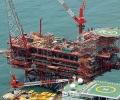
The government is pushing the public sector behemoth ONGC to involve private sector companies and service providers wherever possible to help raise oil and gas production, Petroleum Secretary Tarun Kapoor said Thursday. Kapoor's comments came days after the second-highest ranked official in his ministry asked Oil and Natural Gas Corporation (ONGC) to give away a 60 per cent stake plus operating control in India's largest oil and gas producing fields of Mumbai High and Bassein to foreign companies. "ONGC has to explore more so that it can discover more oil and gas reserves and bring them quickly to production to raise domestic output. The government is very clear that ONGC has to do more," he told reporters.
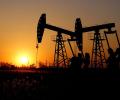
India, the world's third-largest energy consumer and importer, on Wednesday warned of high oil prices hurting the nascent and fragile global economic recovery and floated an idea of long-term supply contracts that provide predictable and stable pricing. Speaking at the India Energy Forum by CERAWeek, Oil Minister Hardeep Singh Puri said there was a mismatch between demand for oil and the supplies producers such as OPEC+ were making and there was a case for raising the production. The world, he said, needs "predictable, stable and affordable" prices for it to recover back to pre-pandemic levels.
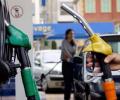
As the world's third-largest oil importer and consumer, India is running out of options as the relentless surge in international oil prices make it imperative to pass them on to consumers, officials said on Monday. India imports 85 per cent of its crude oil needs and about half of its natural gas requirement. While the imported crude oil is turned into fuels such as petrol and diesel, gas is used as CNG in automobiles and fuel in factories.
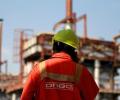
At a time when crude oil and natural gas prices are sky-high, public sector behemoth ONGC's haphazard planning and mismanagement in developing showpiece deep-sea KG-D5 block is costing the nation over Rs 18,000 crores due to the delayed output of oil and gas, government officials said. ONGC was originally to start gas production from the Cluster-II fields in block KG-DWN-98/2 (KG-D5) in June 2019 and the first oil was to flow in March 2020. But these targets were quietly shifted to end-2021 because of deferments in awarding the fragmented work packages of the project, two officials with direct knowledge of the matter said on condition of anonymity.

India is expected to see renewable energy capacity addition of 30,000 MW, with significant contribution from wind power, over the next five years.
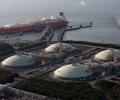
Around 15 years ago, when Reliance Industries (RIL) struck natural gas in the Krishna-Godavari (KG) basin off the east coast, the government made plans to supply that fuel cheaply to scores of generators that sprang up in India triggered by the discovery. Most of the plants, which account for 6 per cent of India's total generation capacity, operate sparsely after the KG-D6 area first failed to meet production targets, and then finally shut shop. Affordable domestic gas was why those thermal plants came up and the rate of the fuel today is why those generators hardly operate. Record liquefied natural gas (LNG) rates may yet again unravel India's ambitions to expand use of gas in industries, households and vehicles. Rates, while volatile, may stay strong this decade as developed nations with higher purchasing power embrace gas as the transition fuel.

The lowest bid earlier had come for Madhya Pradesh at Rs 5.05/unit.

The negotiations started on Sunday, a day ahead of schedule.
 © 2026 Rediff.com - Investor Information - Advertise with us - Disclaimer - Privacy Policy - Sitemap - Feedback - About us - Terms of use - Grievances