
The family of Harish Rana, who was granted permission for passive euthanasia by the Supreme Court, immersed his ashes in the Ganga River, marking the end of a 13-year ordeal following a tragic accident.

The Supreme Court has directed all states and Union territories in India to develop a time-bound protocol for improving the functioning of open prisons, ensuring they serve as effective institutions for reformation and rehabilitation.

Supreme Court judge Justice Ujjal Bhuyan asserts the independence of the judiciary and its importance in upholding the Constitution, emphasizing that the government has no role in the transfer of judges.
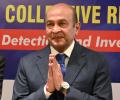
The remarks were made by the bench which refused to agree with the submission made on behalf of Justice Varma that the deputy chairman of Rajya Sabha had no power to reject a motion and, under the Judges (Inquiry) Act of 1968, only the Speaker and the chairman have the power to accept or reject a motion against a judge.

Chief Justice of India lays the foundation for an Integrated Judicial Court Complex in Assam's Kamrup district, facing protests from the Gauhati High Court Bar Association (GHCBA) over the relocation of the High Court.

Without urgent corrective steps, the system meant to ensure safety, dignity, and rehabilitation for children in conflict with the law will remain overburdened, under-resourced, and unable to deliver justice in time.

Supreme Court judge Justice Ujjal Bhuyan emphasized the importance of delivering judgments without external influence to maintain public trust in the judiciary.

Justice Surya Kant has been appointed as the 53rd Chief Justice of India, succeeding Justice Bhushan R Gavai. He will assume office on November 24 and serve until February 9, 2027.

Supreme Court judge Justice K Vinod Chandran on Monday recused from hearing a plea seeking directions to authorities to investigate allegations made by US short seller Viceroy Research that billionaire Anil Agarwal's mining conglomerate was "financially unsustainable" and posing severe risk to creditors.

Justice Surya Kant is set to become the 53rd Chief Justice of India, bringing extensive experience and a record of significant verdicts on key issues.

Justice A M Khanwilkar, the second senior-most judge of the Supreme Court, retired on Friday and thanked bar association leaders for their 'love and affection'.
Lok Sabha Speaker Om Birla admitted a notice for the removal of High Court judge Justice Yashwant Varma and constituted a three-member committee to probe charges against him.
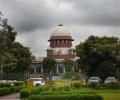
Three judges, including two high court chief justices, were appointed to the Supreme Court on Thursday.
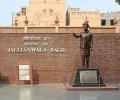
Former Supreme Court judge Justice Rohinton Nariman has warned that events similar to the Jallianwala Bagh massacre could occur if the 'basic structure' doctrine of the Constitution is diluted. In his new book, 'The Basic Structure Doctrine: Protector of Constitutional Integrity,' Nariman argues that the 1973 Kesavananda Bharati judgment, which established the doctrine, is essential for protecting fundamental rights and preventing constitutional amendments that could lead to such tragedies. Nariman's concerns are echoed by Supreme Court judge Justice K V Viswanathan, who applauds the book for its "chilling clarity" and underscores the importance of the Kesavananda Bharati ruling. The book provides a detailed analysis of the doctrine and its implications, highlighting the robustness of the Kesavananda Bharati judgment and the lack of a compelling alternative theory.

The CJI called Justice Gavai his "biggest support" while expressing confidence in the latter's leadership and commitment to constitutional values.
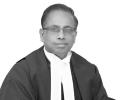
Justice Vishwanathan said he was in "the Common Cause (the NGO which had filed the PIL in coal scam cases). This case was of the ED (Enforcement Directorate), but still...".
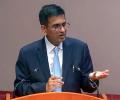
Former chief justice of India D Y Chandrachud on Friday said media reports of him being considered for the National Human Rights Commission chairperson's post were 'untrue'.

Supreme Court judge, Justice B R Gavai, expressed hope that the "current difficult phase" in ethnic strife-torn Manipur will be over soon with the assistance of the executive, legislature and judiciary and the state will prosper like the rest of the country. Justice Gavai, who led a delegation of Supreme Court judges that visited Manipur, called upon the people of the state to work together to restore peace and harmony. He also urged the people of the state to work together to restore peace and normalcy, and lauded the natural beauty he witnessed while travelling from Imphal to Churachandpur. He expressed delight in noting that training programmes were being imparted at the relief camps, and thanked the Chief Justice of Manipur High Court and the district legal services authority for their efforts. Justice Gavai also stressed the need for readmission of students who had to drop out of school due to the conflict and called upon the educational institutions and the public to ensure all students complete their education.

The "construct of the DPDP Act" cannot be changed at this stage, though there may be some minor tweaks in the language of the Rules and formats in certain legitimate cases.

The Supreme Court of India has granted interim bail to Tahir Hussain, a former councillor accused in the 2020 Delhi riots. Justice Ahsanuddin Amanullah, while granting bail, said the allegations against Hussain were grave but as of now they were just allegations. The bench, however, delivered a split verdict, with Justice Pankaj Mithal opposing the bail. The court also questioned the Delhi Police for the delay in the trial over the murder of Intelligence Bureau staffer Ankit Sharma during the riots.

Manu Bhaker on Tuesday admitted that "there has been a lapse may be on my part" while filing nominations

Manu Bhaker has been shockingly ignored for this year's Dhyan Chand Khel Ratna award, a top sports ministry source has asserted

Jaspal Rana questions Sports Ministry, NRAI for ignoring Manu's credentials for Khel Ratna
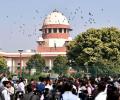
The SC observes that the arrest of Kejriwal by the CBI was unjustified.
The Union Cabinet, at a meeting chaired by Prime Minister Narendra Modi, held a detailed discussion on the Supreme Court judgement on the sub-categorisation of reservation for SCs and STs as granted in the Constitution.
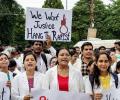
He further commented on the current state of public discourse, saying a "mob rule" is being created wherein politicians capitalise on certain incidents and assure people of the death penalty for culprits even though only the judiciary has the power to pass legal verdicts.

The Lokpal has been working without its regular chief after Justice Pinaki Chandra Ghose completed his term on May 27, 2022.
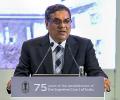
Justice Sanjiv Khanna 'belongs to that school of legal luminaries who give the highest primacy to facts.'

The reservation policy requires a fresh relook and new methods are needed for the uplift of people belonging to Scheduled Castes (SC), Schedule Tribes (ST) and Other Backward Classes (OBC), Supreme Court judge Justice Pankaj Mithal said on Thursday.
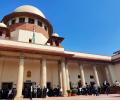
Justice Gavai, who wrote a 281-page separate but concurring verdict, said it is the duty of the State to give preferential treatment to the backward class of citizens who are not adequately represented in government jobs.

Batting for a fresh look at the reservation policy, Supreme Court judge Justice Pankaj Mithal on Thursday referred to a 1961 letter by Jawahar Lal Nehru in which the former prime minister lamented the habit of giving reservations and privileges to any caste or group.

Justice BV Nagarathna said she had to dissent against the demonetisation move by the central government as in 2016, when the decision was announced, the Rs 500 and Rs 1,000 notes comprised 86 per cent of the total currency notes in circulation, and 98 per cent of it came back after they were banned.
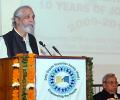
'I have repeatedly been saying that the collegium system is the best available method of appointment of judges, but it needs some changes. This needs discussion. One important change is that the opacity of the government has to go. The government is more opaque than the collegium'

The Supreme Court on Wednesday adjourned till January 10 the hearing on the bail plea of former Jawaharlal Nehru University (JNU) student Umar Khalid in a case lodged under anti-terror law Unlawful Activities (Prevention) Act (UAPA) over his alleged involvement in the conspiracy behind the northeast Delhi riots of February 2020.

The Supreme Court on Tuesday adjourned for a week the hearing on a plea filed by former Jawaharlal Nehru University student Umar Khalid seeking bail in a case lodged under anti-terror law Unlawful Activities (Prevention) Act (UAPA) over his alleged involvement in the conspiracy behind the northeast Delhi riots of February 2020.

The mass exodus of the Kashmiri Pandit community changed the very cultural ethos of Kashmir and there has been little turnback despite three decades having gone by since it got triggered by growing fundamentalism fuelled from across the border, Supreme Court judge Justice Sanjay Kishan Kaul said on Monday.
As soon as the matter came up for hearing, the judges said they wanted to be recused from the case as they belong to the contesting states.

A voter's right to know is 'far too important' in democracy than the privacy of a donor, Supreme Court judge Justice Sanjiv Khanna said on Thursday as the apex court scrapped the 2018 electoral bond scheme for funding political parties.
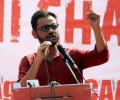
Khalid's petition challenging the October 18 last year order of the Delhi High Court, which had rejected his bail plea in the matter, came up for hearing before a bench of Justices A S Bopanna and Prashant Kumar Mishra.

Non-heterosexual unions and heterosexual marriages ought to be considered as two sides of the same coin, both in terms of recognition and consequential benefits, Supreme Court judge Justice Sanjay Kishan Kaul said as he lamented that the only deficiency at present is the absence of a suitable regulatory framework for such unions.
 © 2026 Rediff.com - Advertise with us - Disclaimer - Privacy Policy - Sitemap - Feedback - About us - Terms of use - Grievances