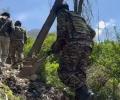
A soldier of the special forces of the army was killed in an encounter between security forces and terrorists following a search operation in Jammu and Kashmir's Udhampur district on Thursday, officials said. The firing took place in the Dudu-Basantgarh area during a cordon and search operation that was launched based on information about the presence of terrorists. The deceased soldier has been identified as Havaldar Jhantu Ali Sheikh of 6 Para of the Special Forces. The operation was still underway when the last reports came in from the spot, they added. Four suspects were also picked up for the area for questioning. This is the third encounter between terrorists and security forces in Jammu in the past over 24 hours.

Prohibitory orders under Section 144 of the CrPC have been clamped in Mon town, but the situation is tense.

The people of Oting in Mon district in the northeastern state said they will erect a monolith in memory of the 14 people on the first anniversary of the killings.
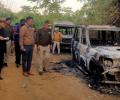
Breaking their silence after four days of a shoot-out in which 13 of their village youth died in firing by Para commandos, the Oting Citizens Office, representing Oting village in Nagaland's remote Mon district on Wednesday rubbished official claims and asserted security forces had tried to hide the dead bodies and dress them in fatigues in a bid to pass them off as militants after a botched up ambush.

Demand for repeal of the act found echoes in the nation's Parliament with National People's Party (NPP) MP Agatha Sangma, a former Minister in the United Progressive Alliance government, terming the act as 'the elephant in the room which (needs to) be addressed' and seeking the 'draconian' Act be repealed.

The Army made no attempt to ascertain the identity of the civilians returning from work on a pick-up truck before shooting them in Nagaland's Mon district on Saturday, a joint report by the state's Director General of Police T John Longkumer and Commissioner Rovilatuo Mor has said.

A National Security Guard commando died of exhaustion during a rigorous exercise at the elite force's garrison in Manesar. AJunior Commissioned Officer, 34-year-old Ratan Lal had recently joined the NSG on deputation from the 6 PARA (Special Forces) of the Army, and was undertaking a battle induction exercise when he collapsed on the training ground.

Defence Minister Manohar Parrikar on Thursday dismissed his Pakistani counterpart Khawaja Asif's statement on use of nuclear weapons.
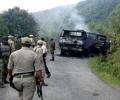
Nationalist Socialist Council of Nagaland-Issac-Munivah wanted to join the operations against NSCN-K militants.

He said cross-border infiltration will continue because camps across the Line of Control, from where terrorists are launched, are still operational, and warned that the Indian Army is ready to "receive" them and keep dispatching them to their graves.

The Special Forces personnel were airdropped deep inside Myanmar territory, closer to the camps of the militants, and the strike started at 3 am.
The Centre on Friday issued a country-wide alert asking the states to heighten vigil to foil any attempt by Pakistan-based terror groups to carry out attacks amid apprehensions of backlash by terrorists after the surgical strike on their launch pads in PoK.

A crack team of about 70 commandos from 21 Para of the Indian Army carried out the surgical strike inside Myanmar territory in the thick of the night that killed 38 insurgents belonging to NSCN(K) and KYKL militant groups on Tuesday.

Parrikar announced that all those seven security personnel killed during the attack will be treated as martyrs that will entitle them to all the benefits available to 'battle casualty' as in war-like situations.

The operation in Nagaland and Manipur was carried out after the army received "credible and specific" intelligence.

The Pampore attack in Jammu and Kashmir "appeared to be" the handiwork of Lashkar-e-Tayiba terror outfit, Central Reserve Police Force Director General Prakash Mishra said.

The roots of the problem lies in the alienation of the tribals. Extreme sensitivity is required to tackle the issues involved. Rough and ready methods of using force may prove counterproductive in the long run, says Colonel (retd) Anil Athale.
 © 2026 Rediff.com - Investor Information - Advertise with us - Disclaimer - Privacy Policy - Sitemap - Feedback - About us - Terms of use - Grievances