
Fast-moving consumer goods (FMCG) companies, retail firms, and producers of consumer durables are witnessing stable urban demand. However, people in the trade are waiting for clearer signs of revival closer to the festival season, starting in September.

'Adventure travel, cultural tours, and wellness retreats are in high demand.'
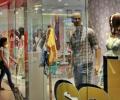
With the rapid evolution of channels like quick-commerce and the emergence of ONDC, the Indian retail industry is 'cautiously optimistic' for 2025, in which new-age technologies such as AI and automation will play a crucial role, driving efficiency and personalisation.

While there was a 6 to 7 per cent increase in volume compared to last year in the first few days of the month which coincided with festivals, a large part of the demand is yet to hit the market.

The spring/summer end-of-season sales have been advanced by a week with brands having high inventories due to weak demand in May because consumers avoided shopping in the hot month.

The retail industry's business is on the brink of full recovery as it achieved 93 per cent of the pre-COVID sales in February, according to a report. Segments such as consumer durables and quick service restaurants (QSR) have shown positive growth of 15 per cent and 18 per cent respectively in February 2021, the report from the Retailers Association of India (RAI) said. "The quantum of de-growth in retail sales has reduced as most segments in retail have started to show significant improvement," it said. Categories like footwear, beauty, wellness and personal care, sports goods and food and grocery are showing steady month-on-month recovery.

After the Covid-19 pandemic that derailed the economy since 2019, the Durga Puja festival in West Bengal is back with an estimated 20-30 per cent jump in festive spending. Retail sector is the key contributor to the state's Durga Puja economy which was Rs 32,377 crore in 2019, according to a British Council study conducted for the state government. Retail accounts for 85 per cent of the total puja economy and the rest is shared among pandal making, decoration, illumination, entertainment, advertisement, food & beverage and others.
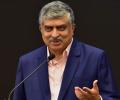
Infosys chairman and Aadhaar architect Nandan Nilekani will join a panel set up by the central government, along with eight other members, to advise the government on designing and accelerating adoption of Open Network for Digital Commerce (ONDC), aimed at curbing digital monopolies. The larger idea is to give 'free and fair' choice to consumers to buy products on an online platform, a senior government official said.

The Department for Promotion of Industry and Internal Trade (DPIIT) will soon start public consultation for a national retail trade policy, which is likely to include an insurance scheme aimed at providing financial protection against losses caused by theft, accidents or natural calamities. The policy will also spell out ways to give traders access to low-cost finance, promote digital inclusion, and create necessary infrastructure to support them, a senior government official told Business Standard. This is expected to offer relief especially to traditional traders, who are facing stiff competition from large e-commerce players.
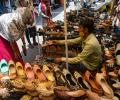
In terms of retail categories, beauty, wellness and personal care saw the steepest decline at 87 per cent, followed by footwear with a dip of 86 per cent last month as against May 2019.

New proposals like booking of retailers selling loose cigarettes and 7 years of imprisonment, are unacceptable, traders argued.

Starting with the third quarter of financial year 2020-21 (Q3FY21), we have seen "unlock" trades at various times. Whenever lockdowns have been eased, traders have taken long positions in consumer-facing businesses. Let's look at the logic. Since March 2020, sectors like retail, personal vehicles, hospitality, aviation, fast-moving consumer goods (FMCG), multiplexes, etc., have been under severe pressure. As a result, there's been a low base effect. Every company in these spaces has suffered top line contraction. Many suffered losses, especially in the first half of FY21.

While the record shipments reflects the prevailing mood at the time, the exponential rise in Covid cases in the country has turned the tide since.
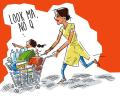
This year, festive sales are expected to push up the annual gross merchandise value of e-commerce companies to around $38 billion, a 40 per cent growth over the previous year.
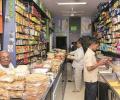
The demands from retailers are fourfold: One, allow kiranas, general trade stores, supermarkets, hypermarkets, and wholesalers to operate every day of the week till 9 pm. Two, ensure uniform and regular opening of all categories of retail. Three, hassle-free movement of goods and employees, and four, lift bans on malls in states like Maharashtra.

For once they shed their formal wear and business suits to set the ramp on fire!
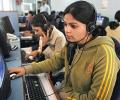
There was a worry that such a policy would hamper businesses, create resentment among the male staff and perhaps also discourage companies from employing women. However, this has proved to be misplaced.
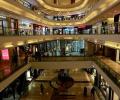
Retailers and multiplex operators want mall owners to either forgo rent for the period of the shutdown or lower rent in the event the mall is open but footfalls are low.
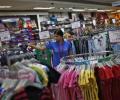
Retailers are also demanding that home delivery across all forms of retail should be allowed to ensure a level playing field.

Twelve retail asssociates were felicitated as regional winners, three top national winners.
For months, offline retailers and traders have been lobbying hard for a national retail policy to protect their business from the growing influx of e-commerce.

The day's strike is a protest at the Union Budget proposal of a 10 per cent excise duty on branded garments. Garment makers had observed a day's strike on Friday, saying it cost them Rs 130 crore (Rs 1.3 billion).
The sobering news is that retailers - including big firms like Reliance Retail - and exhibitors are contemplating issuing force majeure notices to shopping malls and real estate owners, and are in discussions with them to formulate an action plan for sharing the financial burden of the lockdown.
Pantaloon Retail India managing director Kishore Biyani has won the 'International Retailer of the Year' award given by the National Retail Foundation of the US.
BMA, RAI and ECU offer programmes for management in retail.
According to Gibson G Vedamani, CEO of RAI, "We have urged Buddhadeb Bhattacharjee to allow shops to stay open till at least 11.30 at night, if not overnight. In Mumbai and Delhi, a few retailers had approached the government individually and got permission to keep their shops open till late." At present, all retail outlets in West Bengal have to shut by 8.30 pm, making it difficult for people who work late hours to manage their shopping during the week.
'You have come out with a package for the kisan.' 'You have a package for industry.' 'But has anyone addressed the issues concerning small traders?'

Future Group and V-Mart have put in place systems to prevent panic buying at their neighbourhood grocery stores.

The development comes after a recent notification from the Union home ministry, which has permitted companies to resume manufacturing operations and reopening of shops in red, green and orange zones with certain riders.
The Retailers' Association of India invites job seekers and students to the Retail Employment & Career Fair 2005.

With an epic battle of billionaires for supremacy in one of the world's most prolific markets and a pandemic-propelled surge in online shopping in the background, India's nearly trillion-dollar retail market is hoping to touch 85 per cent of the pre-COVID business in the first half of the New Year. In a year when the COVID-19 carnage ripped apart the retail business, circa 2020 will best go down for the unravelling of the war between Jeff Bezos, the world's wealthiest man, and richest Indian Mukesh Ambani for pre-eminence in the booming market that is estimated to reach $1.3 trillion by 2025. It all started with Ambani's Reliance Industries agreeing in August to buy assets of the nation's second-largest retailer for Rs 24,713 crore, just a year after Bezos' Amazon purchased an indirect stake in the indebted Future Retail.
The prime minister is likely to talk about its possible extension.
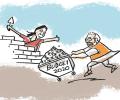
Apart from making your purchases on these platforms expensive, it will also mean sellers will have to face the brunt of reduced cash flows amid already low margins for some. Experts said the proposal, which will take effect on April 1, 2020, and will be inserted as a new section in the Income Tax Act, is expected to affect the working capital of e-commerce companies and reduce cash flows for e-sellers.

India's MRP and Packaged Commodities Acts are dated and not in line with the modern world's digital price mechanisms and comparisons.

India is currently under the 21-day lockdown since March 25, with only essential services exempted to contain the fast-spreading virus.
 © 2026 Rediff.com - Advertise with us - Disclaimer - Privacy Policy - Sitemap - Feedback - About us - Terms of use - Grievances