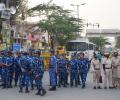
Delhi Police have implemented heightened security measures in Dwarka, including Uttam Nagar, ahead of Eid-ul-Fitr, following communal tensions sparked by a recent incident. The Delhi High Court has directed the police to ensure a peaceful environment for the festival.

In May, 40 Rohingyas were blindfolded and flown to the Andaman and Nicobar islands and then thrown into the sea and made to swim to an island in Myanmar. And after the Pahalgam attack, at least 300 Muslims were 'pushed back' to Bangladesh from Assam.

'The law under the guise of security represents a grave and unnecessary expansion of State power at the cost of fundamental rights,' asserts Aakar Patel.

Several petitions were filed in the apex court challenging the Act, contending that it was discriminatory towards the Muslim community and violated their fundamental rights.

A three-judge Supreme Court bench will hear petitions challenging the constitutional validity of the Waqf (Amendment) Act, 2025, on April 16. The petitions, including those by politicians and the All India Muslim Personal Law Board (AIMPLB) and Jamiat Ulama-i-Hind, were filed in the top court challenging the validity of the newly-enacted law. The Centre has filed a caveat in the apex court, seeking a hearing before any order is passed.
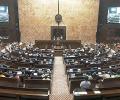
President Droupadi Murmu has given her assent to the Waqf (Amendment) Bill, 2025, which has sparked controversy and legal challenges. The Bill, passed by Parliament after heated debates, has been criticized by opposition parties as "anti-Muslim" and "unconstitutional". The government, however, maintains that the reform will benefit the Muslim community. Several petitions have been filed in the Supreme Court challenging the constitutional validity of the Bill, alleging discrimination against Muslims and undermining their religious autonomy. The Bill repeals the Mussalman Wakf Act, 1923, and introduces restrictions on Waqf properties and their management, which have raised concerns about the impact on the Muslim community.
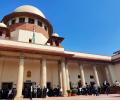
The Supreme Court on Monday agreed to consider listing for urgent hearing the petitions challenging the constitutional validity of the Waqf (Amendment) Act, 2025.
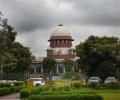
The Supreme Court of India will likely hear a batch of petitions challenging the constitutional validity of the Waqf (Amendment) Act, 2025 on April 15. The Act, which came into force on April 8, has been met with widespread criticism from various stakeholders, including politicians, the All India Muslim Personal Law Board (AIMPLB), and Jamiat Ulama-i-Hind. They argue that the law is discriminatory and violates the fundamental rights guaranteed under Articles 25 and 26 of the Constitution. The petitions allege that the amendments give the government more control over the administration of Waqf, effectively sidelining the Muslim minority from managing their own religious endowments.

A fresh plea has been filed in the Supreme Court challenging the constitutional validity of the Waqf (Amendment) Act, 2025, claiming it was a "blatant intrusion" into the rights of a religious denomination to manage its own affairs in the matter of religion. The plea, filed by Samastha Kerala Jamiathul Ulema, argues that the amendments would distort the religious character of Waqfs and irreversibly damage the democratic process in their administration. Several other petitions have been filed in the apex court challenging the validity of the bill, including those by Congress MP Mohammad Jawed, AIMIM president Asaduddin Owaisi, and AAP MLA Amanatullah Khan.
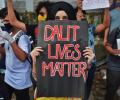
Sixteen people of a village in Medak district of Telangana were arrested for allegedly enforcing a social boycott on members of a Dalit family after they refused to play 'Dappu' (percussion instrument) during village ceremonies, police said on Tuesday.

A bench of justices Hrishikesh Roy and S V N Bhatti is likely to hear the plea filed by NGO Association of Protection of Civil Rights.

The Lucknow bench of the court said the persons concerned may file their responses to the notices within 15 days and directed the state authorities to consider the said replies and a pass reasoned order on those.

The Opposition had dubbed the directives issued by the three states as divisive and discriminatory against Muslims, and the apex court's order effectively ensured that the Yatra was held without their orders being enforced.

'Government cannot pick and choose as to against whom they want to take action and against whom they do not want to take action.'

The way the Bahraich riot has played out should worry the BJP. The party has emboldened Hindu youngsters to such an extent that its MLAs feel the need to go to the police against their party members. Is this what the BJP wants, asks Jyoti Punwani.

The Uttar Pradesh government on Friday defended its directive requiring eateries along the kanwar yatra route to display the names of their owners and staff, saying the idea was to bring in transparency, avoid 'potential confusion' and ensure a peaceful yatra.

A bench of Justices Hrishikesh Roy and S V N Bhatti said it won't issue any clarification on the July 22 order as "We have said what needed to be said in our July 22 order. Can't force anyone to disclose names."

The Supreme Court on Monday imposed an interim stay on directives passed by the Uttar Pradesh and Uttarakhand governments that eateries along the Kanwar Yatra route must display names of owners.

'How was it possible for Singh to have got a government job, and that too one involving the handling of guns, had he been insane?'

'The situation in Nuh could have easily returned to normalcy if the trader class wished so, but they didn't.'

The Supreme Court on Wednesday refused to entertain a plea seeking to prevent a 'mahapanchayat' called by Hindu outfits in Uttarakhand and registration of an FIR against hate speeches allegedly targeting members of a particular community.

'Not only are Muslim homes and shops being bulldozed, but the cops are filing random FIRs even against people who died two-three years ago, against those who have moved to neighbouring states since almost two years to work there.'

'Thousands of hijabis students are waiting to resume their education'

'They are afraid that if they approach a police station for filing a complaint they might themselves get arrested under some random charges.'

Markets in Uttarakhand's Purola and neighbouring towns remained closed amid heavy police deployment on Thursday in protest against the imposition of prohibitory orders to prevent a 'mahapanchayat' that was scheduled to be held there over alleged incidents of 'love jihad'.

The Centre on Thursday disputed in the Supreme Court the figure pertaining to alleged attacks on Christian institutions and priests, terming the data "wrong" and claiming the petitioners wanted to keep "the pot boiling" to sully the image of the country abroad.

Justice Kohli said the advent of artificial intelligence has caused some concerns amongst the legal fraternity.

'The government should immediately enact an Act to make caste discrimination a criminal offence and lay down a procedure similar to that of the Anti-Ragging Act.' 'Ragging has nearly been eliminated because it is treated as a criminal offence.' 'Similar procedure should be used in case of caste discrimination.'

The Supreme Court Tuesday asked the Centre to apprise it about the views on the issue of protection of interest of citizens till the colonial-era penal law on sedition is reconsidered by an appropriate forum.
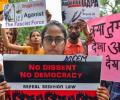
The Centre Monday urged the Supreme Court not to invest time in examining the constitutional validity of the penal law on sedition, saying it has decided to re-examine and re-consider the provision which can only be done before the competent forum.

A total of 326 cases were registered in the country under the controversial colonial era law of sedition between 2014 and 2019 in which just six persons were convicted.
The Supreme Court on Wednesday stayed the operation of sedition law, and ruled that all pending cases, appeals and proceedings with respect to charges framed for sedition should be kept in abeyance.

There have been over 300 attacks against Christians and their churches and prayer halls, primarily in northern India, states Aakar Patel.

'Those who support the attacks should realise that beating Kashmiri students can't help anyone change the result of the game.'
The map shows the state wise rate of crime/atrocities committed against SCs by non-SCs in 2016.
The bill for amendments to the UAPA was passed by Parliament on August 2 and it received the President's assent on August 9. The amended Act allows the Centre to designate individuals as terrorists and seize their properties.

Two young men have been sentenced to death by a special court in Tirunelveli, Tamil Nadu for the brutal murder of four members of a Dalit family, including two children, at a village in the district in 2007. Judge T S Nandhakumar of the Special Court, formed under the Protection of Civil Rights Act, also sentenced Katturaja, 32, and Vettum Perumal, 33, to five terms of life imprisonment which will run consecutively.
K G Premshankar,additional director general of police in Kerala was on Monday sentenced to six months' simple imprisonment by a court in Kochi in connection with a case of assault on the editor of a Malayalam eveninger from Kannur in 1988.
A Sundar Kumar Das, serving as the chief vigilance officer with the power generation corporation, has lodged a complaint against the additional director general of police (Intelligence) K Arvinda Rao under the SC/ST Atrocities (Prevention) Act. He alleged that many hurdles were created for him just because he belonged to the SCs, though he had been discharging his duty with dedication.
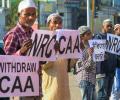
The plea filed by NGO Association for Protection of Civil Rights and others also sought a direction to the Centre to refrain from preparing the National Register of Citizens.
 © 2026 Rediff.com - Advertise with us - Disclaimer - Privacy Policy - Sitemap - Feedback - About us - Terms of use - Grievances