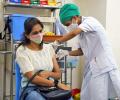
The Serum Institute of India is the first Indian company to seek approval for the COVID-19 booster dose.
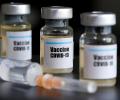
The Union Health Ministry has said in response to a Right to Information application that it does not know where records related to agenda circulated in meetings of the National Expert Group on Vaccine Administration for COVID-19 are held.
NITI Aayog's attempt to bust coronavirus myths provokes a virtual storm of controversy.
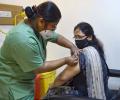
The Centre wrote to all states and union territories on Thursday and asked them to make necessary arrangements for this, the Union Health Ministry said.

The COVID-19 vaccine of Biological-E is currently undergoing phase-3 clinical trial after showing promising results in phase 1 and 2 trials.
The Subject Expert Committee on COVID-19 of the CDSCO on October 12 after deliberating Bharat Biotech's EUA application had recommended granting emergency use approval to Covaxin for use in the 12-18 years age group with certain conditions.
India achieved this coverage in 130 days as against the USA's feat in 124 days.
According to Niti Aayog Member V K Paul, India is in a somewhat better position now but the country still has a long way to go because 90 per cent of the people are still susceptible to coronavirus infections.

The Centre on Saturday directed the states and UTs that no fresh registrations of healthcare and frontline workers will be allowed since some ineligible beneficiaries were getting their names enlisted for vaccination against COVID-19, under this category, in violation of rules.
Not enough data has been generated locally to decide on the need for a booster dose of COVID-19 vaccine for those fully inoculated, say experts amid the possibility of a third wave of the viral disease hitting the country between September and October.
According to government sources, the matter was discussed by the national expert group on vaccine administration for COVID-19 in its last meeting held on August 22.
The Kerala high court has directed the Centre to allow scheduling, on CoWIN portal, of second Covishield dose after four weeks from the first for those who want to take it earlier than the present suggested gap of 84 days.
According to officials, an additional dose of vaccine is different from a booster dose.

The Centre told the Bombay high court on Tuesday that a door-to-door COVID-19 vaccination programme for senior citizens, specially-abled, bed-ridden and wheelchair-bound people is currently not possible, but it has decided to start 'near-to-door' inoculation centres.
These decisions were taken by the ministry based on the fresh recommendations by The National Expert Group on Vaccine Administration for COVID-19 (NEGVAC) and have also been communicated to the states and union territories, an official statement said.

Asked if the government has decided to administer the COVID-19 vaccine to the entire population free of cost on priority basis and if so, the target fixed to administer the doses, the health minister said according to Revised Guidelines for Implementation of National COVID Vaccination Program, which came into effect from June 21, all citizens aged 18 years and above, irrespective of their income status, are entitled to free vaccination at all government vaccination centres.
The decision empowers pregnant women to make an informed choice on taking the Covid vaccination, the ministry said, adding these women can now register on CoWIN or walk-in to the nearest Covid vaccination centre to get themselves inoculated.
Chairperson of the COVID Task Force for All India Institute of Medical Sciences, Dr Naveet Wig on Thursday said that the COVID-19 crisis is 'a dynamic situation' and to prevent a third wave of the pandemic, there is a need to keep changing strategies.
The states and Union territories were also urged not to store, reserve, conserve or create a buffer stock of the COVID-19 vaccines, the Union health ministry said in a statement, a day after the start of the second phase of India's inoculation drive in which the coverage has been expanded to include everyone above 60 and those over 45 with specified co-morbidities.
"The concrete actions are a stern indication that Government of India is making all out efforts to increase vaccine production in the country as well as attracting foreign vaccine manufacturers to supply the required vaccine doses for national Covid vaccination programme," the ministry in a statement.

An important focus of the dry run will be on management of any possible adverse events following immunisation.

Modi tweeted that the meeting discussed important issues related to the progress of vaccine development, regulatory approvals and procurement.

The official expressed hope on the success of the five vaccines that are under different phases of trial in the country.
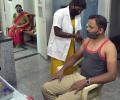
The Centre has said that on-site registration for COVID-19 inoculation for healthcare and frontline workers aged 18 to 44 years will now only be available at government COVID vaccination centres.
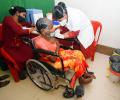
The Centre has written to states and Union Territories to immediately undertake necessary measures to include people aged 45 and above in the COVID-19 vaccination drive and stated that registration on the Co-WiN portal for the same would begin from April 1.

Those intending to undertake international travel for education purposes, joining employment and as part of the Indian contingent to the Tokyo Olympics will be allowed to take the second dose of Covid vaccine Covishield prior to the prescribed time interval of 84 days after the first dose.

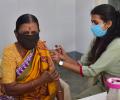
The Centre Thursday issued guidelines for vaccination near home, making it easier for the elderly and the differently-abled to get inoculated against coronavirus close to the places of their residence.
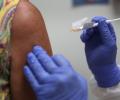
Each state will plan it in two districts and preferably in five different session-type settings -- district hospital, community health centre or primary health care centre, urban site, private health facility and rural outreach.
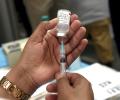
The first 100 beneficiaries of such foreign vaccines shall be assessed for seven days for safety outcomes before it is rolled out for further immunisation programme within the country, the Union health ministry said.
'Better to prevent than to wait for evidence. Protection delayed can also mean protection denied'

Stressing on the need to protect both lives and livelihoods, he said public health action in India and across the world must be continually guided by evidence from four key questions -- how transmissible is the variant, severity of the disease it causes, how well vaccines and prior SARS-CoV-2 infection protect and how common people perceive risk and follow control measures.

In a statement, the PMO said three vaccines are in advanced stages of development in India, out of which two are in Phase II and one is in Phase-III. It further said Indian Scientists and research teams are collaborating and strengthening the research capacities in neighbouring countries such as Afghanistan, Bhutan, Bangladesh, Maldives, Mauritius, Nepal and Sri Lanka.
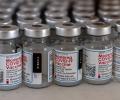
Currently, the country is using two 'made-in India' jabs -- Covishield and Covaxin -- to inoculate its billion-plus population and has administered 20 crore doses since launching the world's largest vaccination drive in mid-January. A third vaccine, Russian-made Sputnik V, has been approved by the government and is being used on a smaller scale at present.

More than 30 vaccine candidates have been supported and they are in different stages of development. Three candidates are in advanced stage of Phase I, II and III trials, and more than four are in advanced pre-clinical development stage, Choubey said.
The procurement and distribution will be centralised though the government is yet to take a call on the initial number of doses that will be procured.

Union Health Minister Harsh Vardhan on Friday said the COVID-19 vaccination drive will be extended in the coming days and asserted that there should not be any misconceptions about the two Indian vaccines being administered in the country.
Paul noted that "three to four months from now, there will be other vaccines and the stockpile will be even bigger. "And more acceleration can be brought about in the vaccination programme," Paul added.
'People on the wait list will be accommodated for vaccination when the scheduled beneficiaries don't turn up.'

As India gears up to vaccinate people above 60 years of age and those over 45 years with comorbidities against COVID-19 from March 1, the Union health ministry on Friday said the facility of on-site registrations will be available so that eligible beneficiaries can walk into identified vaccination centres, get themselves registered and get inoculated.

Based on this price, state governments, private hospitals, industrial establishments, etc would be able to procure vaccine doses from the manufacturers.
 © 2026 Rediff.com - Advertise with us - Disclaimer - Privacy Policy - Sitemap - Feedback - About us - Terms of use - Grievances