
A new study suggests that moons orbiting free-floating planets, with dense hydrogen atmospheres and tidal heating, could maintain liquid oceans for billions of years, potentially supporting the development of complex life.

Manika Vishwakarma walked into Miss Universe not just as a contestant, but as a statement of modern India -- confident, cultured and completely in her element.
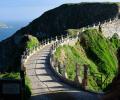
The wee island in the English Channel, where the only motorised vehicles are tractors, is a place one can return to again and again, says Dilip D'Souza.


A team of researchers has revealed that the old adage "what goes up must come down" is ringing true for an immense cloud of hydrogen gas that is heading towards our galaxy at nearly 7 lakh miles per hour.

The structures appear to be 'lumps' in the thin gas that lies between the stars in our galaxy, researchers said.
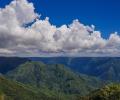
The beautiful hill station of Shillong, known for its natural beauty and rich culture, has been named the most popular travel spot in India for 2025.

The annual Perseid meteor shower occurs when the earth passes through the cosmic debris from the trail of Comet Swift-Tuttle in 1992. It gets more magical when it aligns with the enchanting Aurora Borealis also known as the Northern Lights.

From stunning animal portraits to captivating glimpses of behaviour in their natural habitat, the World Nature Photography Awards contest showcases the intricate relationship between animals, plants, fungi, and humans.

Images that should keep you grinning for days on end.

The new, "fluffy" planet has been named 'WASP-193b' and was found to be located about 1,200 light years away from Earth, roughly equivalent to 10,800 trillion kilometres.

The Royal Observatory Greenwich shortlisted 34 images for its Astronomy Photographer Of The Year 2023 competition from thousands of entries received from all over the world.

Hint: She calls Isha her 'favourite partner in life and crime.'
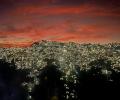
Looking for Treasures From Mizoram to embrace through 2024 and beyond.

The Royal Observatory Greenwich has announced the shortlisted images of the 2022 Astronomy Photographer of the Year!
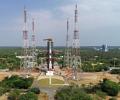
Days after landing on the Moon, India will aim for the Sun on Saturday with its maiden solar expedition, as ISRO's trusted PSLV will carry the Aditya L1 mission on a 125-day voyage to the Sun.

The spectacular Milky Way over the picturesque Bavarian mountain, Herzogstand, the remarkable Horsehead Nebula and the Flame Nebula, a vast cloud of gas and dust where new stars are being born; the Royal Observatory's Insight Investment Astronomy Photographer of the Year 2019 has once more received thousands of outstanding images. The competition, which is run by the Royal Observatory Greenwich, sponsored by Insight Investment and in association with BBC Sky at Night Magazine, is now in its eleventh year and has broken the record number of entries once more, receiving over 4,600 entries from enthusiastic amateurs and professional photographers, taken from 90 countries across the globe. The winners will be announced on September 12, and an exhibition of the winning images from the past years of the contest will be on show at the National Maritime Museum in Greenwich from September 13.

Thank heavens for these images! From a mesmerizing panorama of the aurora borealis in Iceland to a beautiful image of Comet Neowise, the Royal Observatory's annual Astronomy Photographer of the Year competition has again produced some truly astounding images. Run by the Royal Observatory Greenwich in London in association with BBC Sky at Night Magazine and now in its thirteenth year, the competition this year received over 4,500 entries from around the world. The competition winners will be announced on September 16 at an online award ceremony, and displayed in London's National Maritime Museum that same month. Here's our favourite images from this year's batch.

The Nobel Prize in Physics was on Tuesday awarded with one half to James Peebles for his theoretical discoveries in physical cosmology and the other half jointly to Michel Mayor and Didier Queloz for discovering an exoplanet orbiting a solar-type star.
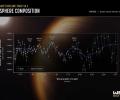
The observation is the most detailed of its kind to date, demonstrating Webb's unprecedented ability to analyse distant atmospheres, according to NASA. WASP-96 b is one of more than 5,000 confirmed exoplanets in the Milky Way.

The Nobel Assembly on Tuesday said in a tweet, 'The Royal Swedish Academy of Sciences has decided to award the 2020 Nobel Prize in Physics with one half to Roger Penrose and the other half jointly to Reinhard Genzel and Andrea Ghez.'

Gorgeous galaxies and stunning stars make up this selection of pictures from the shortlisted entries for this year's Insight Astronomy Photographer of the Year competition.
The earth is actually part of a formation called the Sagittarius Dwarf galaxy; an entity so small -- in the larger scheme of the cosmos -- that it got swallowed up by the Milky Way.

The Hubble Space Telescope has captured an image of a glittering star cluster, resembling an opulent diamond tapestry, that contains a collection of some of the brightest stars seen in our Milky Way galaxy.

If the gas ball is the result of a supernova, then it's the most powerful supernova ever seen.
Readers share memorable pictures of their mothers. Share yours too!

If you want to look at nice space pictures, then we'd highly recommend the Astronomy Photographer of the Year competition. The UK's Royal Observatory Greenwich has chosen the winners of its 2018 Astronomy Photographer of the Year competition, which honours photography of the cosmos across multiple categories, such as "People and Space," "Aurorae," and "Galaxies." The top prize was awarded to American photographer Brad Goldpaint, whose photo "Transport the Soul" captures Moab, Utah, with a photographer, rock formations, Andromeda and the Milky Way. This year's competition received over 4,200 entries from 91 countries around the world.

Astronomers have imaged in unprecedented detail a distant galaxy near the edge of the universe and found that it is forming stars hundreds to thousands of times faster than the Milky Way.
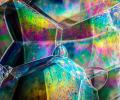
Incredible images depicting the scientific world give a beautiful insight into the academic world. A shortlist of images from the Royal Photographic Society's science photographer of the year competition has been released and includes images from the macroscopic to the microscopic. The winning images will be revealed in October to coincide with the opening of the free exhibition. The Science Photographer of the Year exhibition will run at the Science Museum from October 7-January 5.

An outstanding image of a nearby galaxy has been captured by the NASA/ESA Hubble Space Telescope.
Astronomers have found what they say is a huge black hole several million times the size of the sun that is hurtling through space near a galaxy four billion light years away.
Titled Shabdhatharapadham,(The Sound of Milky Way), the book explores the sound engineer's dramatic journey from an obscure village to Oscar fame.

This year has been the year of the no travel, which has left millions reminiscing on adventure-filled trips abroad. To celebrate the wonder of world travel, thousands of photography enthusiasts entered Agora #Travel2020, sharing the moments they feel captured the true essence of exploration. Octavi Royo, Agora's co-founder and CEO, said: "Thanks to these photos, we can travel to some amazing corners of our planet and see them from the point of view of travel photographers." Scroll down to see our pick of the shortlisted images...


China's Tianhe-2 supercomputer, stated to be twice faster than its competitor in US has retained its status as the world's most powerful computer for the third time, according to a report.

With barely weeks left to enter the 2016 Sony World Photography Awards, the world's biggest photography competition, photographers from around the world, including India, have been submitting some of the most stunning images -- many capturing breathtaking shots of mother nature at her finest.

If you want a reminder of just how gorgeous our universe is, then take some time to browse the winners of the 2020 Insight Investment Astronomy Photographer of the Year competition. French photographer Nicolas Lefaudeux took the top prize with a tilt-shift perspective on the Andromeda Galaxy. The winning images are part of an exhibition opening on October 23 at the National Maritime Museum in London and have been collected into a book. Cue some truly innovative an unexpected captures of galaxies, nebulae, planets, the Moon and even SpaceX satellites.

The office building housing Chinese supercomputer Tianhe-1, one of the world's fastest supercomputers, suffered damage.

The Epson International Pano Awards showcases the work of panoramic photographers worldwide and is the largest specialist competition for panoramic images. This year the competition received 4913 entries from 1258 photographers in 72 countries, but the overall winner of the 2019 Open competition is Mieke Boynton from Australia - the first female to win the title. Scroll down for stunning views.

Stunning photographs have captured the Perseid meteor shower that has delighted stargazers across the world.
 © 2026 Rediff.com - Advertise with us - Disclaimer - Privacy Policy - Sitemap - Feedback - About us - Terms of use - Grievances