
Justice (retd) G T Nanavati, who gave a clean chit to Gujarat Chief Minister Narendra Modi in the Godhra train carnage, on Friday refused to be drawn into a controversy over comparisons of his report with that of the Banerjee Commission set up by the Railway Ministry.
The commission headed by the retired Supreme Court judge said recording of evidence in Ahmedabad, Vadodra, Bharuch and Narmada will begin from July 15.
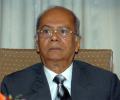
Nanavati was appointed as judge of the Supreme Court with effect from March 6, 1995, and retired on February 16, 2000.
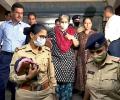
The two were produced before metropolitan magistrate SP Patel after their police custody ended.
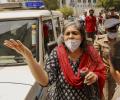
A court in Ahmedabad on Sunday remanded social activist Teesta Setalvad and former state director general of police R B Sreekumar in police custody till July 2 in a case of fabricating evidence to frame innocent persons in connection with the 2002 Gujarat riots.
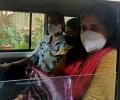
A Special Investigation Team (SIT), to be headed by a deputy inspector general (DIG) of Gujarat Anti Terrorist Squad (ATS), will probe the case against activist Teesta Setalvad and former Indian Police Service officers R B Sreekumar and Sanjiv Bhatt who have been accused of abusing the process of law by fabricating evidence to frame innocent people in connection with the 2002 Gujarat communal riots, a senior official said on Sunday.
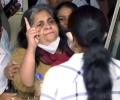
After her detention on Saturday, she had been taken to the Santacruz police station in Mumbai for informing the local police about her detention.
The term of the one-man inquiry commission had ended on January 31. Justice Nanavati had said he would submit his report to Patil.

Justice Nanavati Commission on Tuesday submitted its final report on the 2002 Gujarat riots to state Chief Minister Anandiben Patel.
The action came after Amit Shah accused Teesta of giving baseless information to the police about the 2002 Gujarat riots.
The Gujarat high court has rejected a petition seeking direction to the Justice Nanavati-Mehta Commission inquiring into the post-Godhra riots of 2002, to summon Chief Minister Narendra Modi.
Gujarat government has given one year extension to Justice Nanavati and Justice Mehta Commission probing 2002 Godhra and post-Godhra communal riots, state government officials said on Thursday.
A two-member commission headed by Justice G T Nanavati on Thursday submitted the first part of its report on the 2002 Sabarmati train carnage in Godhra and subsequent riots to Gujarat Chief Minister Narendra Modi. The commission, appointed by the Modi government after the worst-ever riots in the state and comprising retired Justices Nanavati and Akshay Mehta, examined more than 1,000 witness during the period of six years.
Decks were cleared for tabling the report of Justice Nanavati Commission, which probed the 1984 anti-Sikh riots with the union cabinet clearing the action taken report.
The Communist Party of India (Marxist) demanded action against Union Minister Jagdish Tytler on the basis of the Nanavati Commission report on the 1984 anti-Sikh riots.
The commission's term, which was to expire on August 2 , 2004 has now been extended upto November 2, 2004.
The documents, which Sinha had asked, include the letter written by Narayanan to Vajpayee on the steps being taken to control the Godhra riots.\n
'I don't think the Congress party has learned any lessons from 1984. What can they have learnt when the Sikh victims are still to get justice?'
The panel is understood to have recommended reinvestigation of cases against some Congress leaders including Sajjan Kumar.
'All those rumours that were floating around Delhi could not have been the basis of my report,' says Justice G T Nanavati, who probed the 1984 anti-Sikh riots.
Shivraj Patil said the Congress leaders were not at fault for the riots of '84.
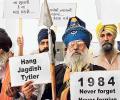
The riots that killed more than 3,000 people were in retaliation against the assassination of Prime Minister Indira Gandhi by her Sikh bodyguards on October 31, 1984.

Delhi MLA Manjinder Singh Sirsa said Kamal Nath had allegedly given shelter to five people who were accused in one of the seven cases.
The Gujarat government on Monday granted yet another extension to the Justice Nanavati commission which is probing the 2002 post-Godhra riots.

Suspended Gujarat IPS officer Sanjiv Bhatt wrote a letter to senior Bharatiya Janata Party leader and Rajya Sabha MP Arun Jaitley, inviting him for a national debate on any issue pertaining to the 2002 riots in the state.
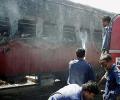
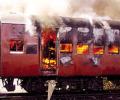
Fifty-nine 'karsevaks' were killed in the Godhra train burning incident of February 27, 2002, triggering the worst communal riots in the history of Gujarat.

The Nanavati Commission, which was appointed in 2002, after five years observed that police at some places were ineffective in controlling the mob and said the post-Godhra riots that spread out in the state were "not a pre-planned conspiracy or orchestrated violence.

A Special Investigation Team is likely to be set up by the government next week for a fresh investigation into the 1984 anti-Sikh riot cases.

Raking up the issue of 1984 riots, Bharatiya Janata Party leader Arun Jaitley on Monday alleged that those guilty for the "state sponsored" violence still remain unpunished.
After Congress questioned the logic of the $1 billion loan to the Adani group, the Communist Party of India (CPI) on Friday joined issue demanding RBI's intervention in the matter.

'The cases on hand have no genesis in the act of terrorism or waging war against the state,' the court said.

Sacked Gujarat cadre IPS officer Sanjiv Bhatt was rebuked for his conduct of contacting opposition Congress party, NGOs and their activists to influence the Supreme Court which on Tuesday said he has not come up with "clean hands" to question the lodging of criminal cases against him.
 © 2026 Rediff.com - Advertise with us - Disclaimer - Privacy Policy - Sitemap - Feedback - About us - Terms of use - Grievances