
The Supreme Court of India has ruled that governors cannot indefinitely delay giving assent to bills passed by state legislatures, setting a timeline of one to three months for their actions. The court said the governor must act "as soon as possible" and that failure to comply with the timeline will make their inaction subject to judicial review. The ruling comes as several opposition-ruled states have accused governors of delaying assent to bills passed by their assemblies.
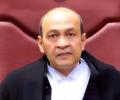
A plea in the Supreme Court of India seeks a direction to Delhi Police to lodge an FIR over the alleged discovery of semi-burnt stash of cash from the official residence of Delhi High Court judge Yashwant Varma. The plea challenges a 1991 judgement that prohibits criminal proceedings against judges without prior consent from the Chief Justice of India, arguing it violates the principle of equality before the law. It also seeks to declare the collegium's 3-member committee investigating the incident as having no jurisdiction and calls for action against corruption within the judiciary.

'...by directing these draconian provisions against political and ideological opponents of the ruling group, minorities, and those who dare to dissent through and selective prosecution and prolonged incarceration as undertrials.'
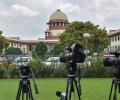
Observing that issues pertaining to the change of land use should be addressed on the administrative side, the Supreme Court on Thursday rejected the Supreme Court Bar Association's plea to allot an entire tract of land, which was allotted to the apex court, for conversion into a chamber block for lawyers.
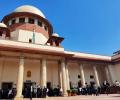
The National Judicial Commission Bill, 2022, was introduced after the majority of voice votes were in its favour.

Judges would not be allowed to delay judgements beyond three months after conclusion of arguments, according to a proposed law which lays downs standards and accountability for members of the higher judiciary.
A much delayed bill which provides for a mechanism for investigation against judges was passed in the Lok Sabha amid din created by pro-Telangana members.
The Lok Sabha was adjourned abruptly on Wednesday after uproar created by the Bharatiya Janata Party which wanted voting on two bills -- Judicial Accountability and 114th Constitution Amendment Bill.
A much-delayed bill which provides for a mechanism for investigation against judges was taken up for consideration in the Lok Sabha amid demands that it should be withdrawn and amended to give it more teeth.
The much-talked about Judicial Accountability Bill that will provide for accountability of judges and establish a credible mechanism for investigating individual complaints of misbehaviour will be taken up by the Lok Sabha on Wednesday.
Law Minister Salman Khurshid faced a tough time, deliberate interruption of debate on his own Judicial Standards and Accountability Bill to announce 4.5 per cent reservation quota to the minorities led to disruption of the Lok Sabha on Wednesday evening, as angry Bharatiya Janata Party members raised slogans and rushed into the House well forcing adjournment for the day.
Against the backdrop of Team Anna finding loopholes in a bill on judicial accountability, government on Tuesday said there could not have been a "more extensive measure" and termed as "unfair" the criticism for not going far enough on the issue.
A bill which seeks to increase the retirement age of high court judges will have to wait for passage in the Lok Sabha, at least till the second part of the Budget session which begins in the last week of April.
The Union Cabinet on Tuesday approved the Judicial Standards and Accountability Bill. According to the provisions of the Bill, judges would not be allowed to delay judgments beyond three months after the conclusion of arguments. The Bill lays downs standards and accountability for members of the higher judiciary.The Bill aims at laying down judicial standards and establishing a mechanism to deal with complaints of 'misbehaviour' or 'incapacity' of a judge of the Supreme Court

In his letter to the prime minister, Hazare said he would continue the campaign in the capital till the Lokayukta is not appointed and the Swaminathan Commission Report is not implemented.

The United Progressive Alliance government's efforts to rein in the judiciary may come unstuck as its ambitious bill scrapping the collegium system of appointing judges to the Supreme Court and high courts as the Bharatiya Janata Party is unlikely to allow the passage in the ongoing Parliament session.
.jpg)
Rahul met the prime minister for about 30 minutes before the party group chaired by Congress President Sonia Gandhi with the prime minister by her side began deliberations at Dr Singh's residence.

Congress Vice President Rahul Gandhi on Saturday accused the Bharatiya Janata Party of blocking passage of six anti-graft bills by Parliament, which form part of the government's anti-corruption framework.

Several top jurists on Monday pushed for scrapping the existing collegium system where judges appoint judges but government's plans to bring a bill to make the process of appointments more transparent may take some more time.

Attacking Rahul Gandhi over his recent crusade on anti-corruption bills, the Bharatiya Janata Party on Saturday said he was a "late entrant" in the anti-graft bandwagon and his effort was "not genuine" as he had never spoken earlier on the issue.

'Will the age of majority be decided on a case-by-case basis by judges?' 'Does a 24-year-old woman still need "care, protection and guidance" and only from parents?' 'Is a Facebook post enough to declare a person a dangerous radical?' asks Shekhar Gupta.

A never-seen-before Rahul Gandhi exuded toughness and aggression. And it was not only about the words he used to castigate the opposition but his dialogue delivery, facial expressions, overall body language that conveyed a different, more confident Gandhi, says Saisuresh Sivaswamy.
 © 2026 Rediff.com - Advertise with us - Disclaimer - Privacy Policy - Sitemap - Feedback - About us - Terms of use - Grievances