
Fundraising through pre-initial public offerings (pre-IPOs) more than doubled in 2025 compared with the previous year, but remained below the peak seen in 2023. The narrowing gap between pre-IPO and IPO pricing is the reason for the decline in both the number and value of such deals over the past two years.
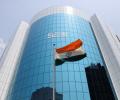
India's market regulator has found that Bank of America shared confidential details ahead of a 2024 block trade and later misled regulators during the investigation.

Companies are primarily using funds raised through fresh equity issuance to repay existing debt, followed by allocation for capital expenditure, according to a study by Bank of Baroda of over 200 filings with the market regulator between April and October 2025. The report stated that of these filings with the Securities and Exchange Board of India (Sebi) - covering both funds already raised in FY26 and future intent - 189 companies provided clear data on the purpose of the fund-raising.

Market experts say India's IPO ecosystem has matured to support both primary and secondary issuance, rendering the mix less consequential.
'Listing of scaled Indian subsidiaries of multinational corporations as well as of Indian conglomerates continues to remain a key theme for IPOs in India.'
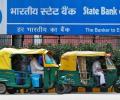
State Bank of India (SBI), the largest lender in the country, has launched a share sale to institutional investors to raise upto Rs 25,000 crore, the biggest qualified institutional placement (QIP) so far by an Indian firm, and has set a floor price of Rs 811.05, which is at a 2.5 per cent discount on Wednesday's closing price.

More than 30 technology startups, collectively valued at $100 billion, are poised to go public by 2027, signalling a potential rebound in India's stock market activity, according to a report by investment bank The Rainmaker Group. Walmart-owned Flipkart, financial technology (fintech) leader PhonePe, SoftBank-backed Lenskart, Razorpay, Zetwerk, and Meesho are among the top companies preparing to go public in India.

After heightened activity in 2024, there has been a slowdown in new listings, with no main-bourse IPOs hitting the market in the past three weeks due to a correction in the secondary market. This slowdown in IPO activity is reflected in the numbers, as only five companies went public in January and four in February, compared to 16 listings in December 2024.

'Many do not have robust business models, and their prospects of survival and long-term growth are poor.'

As many as 31 mainboard IPOs raised a cumulative Rs 26,272 crore in this period, according to Prime Database. During the April-September 2007 bull run, 48 IPOs totalling Rs 21,243 crore were launched. The number of deals in H1FY24 was 2.2 times that of the same period of the last fiscal year, but the amount raised was 26 per cent lower.

Jefferies, IIFL, and JM Financial - none of which were in the top five last year - have now claimed the top spots in the league tables for equity capital markets (ECM) during the first nine months of calendar year 2023 (CY23), a period characterised by small- and mid-sized transactions. This shift marks a significant change, with these firms outperforming the bulge-bracket investment banks. According to data provided by Refinitiv, Jefferies leads the domestic ECM market, having handled share sales worth $2.3 billion, representing 12.4 per cent of the total volume of $18.4 billion for ECM transactions.

'A key reason for the strong interest in IPOs has been an increased focus on profitability and reasonable pricing of deals.'

Companies, which missed out on listing earlier, are giving it another shot but with significantly-reduced issue sizes. In the recent past, companies such as TVS Supply Chain Solutions, Suraj Estate Developers, and ESAF Small Finance Bank have re-filed their draft red herring prospectuses (DRHPs) with the Securities and Exchange Board of India (Sebi). This came after they slashed their issue sizes by 20-60 per cent.

Mergers and acquisitions (M&As) by Indian companies have declined sharply by 80 per cent so far this year, in contrast with the same period last year, as bankers predict lower deal volumes due to falling profit margins of Indian companies and feeble stock markets. The decline in Adani Group shares has also hit buyer sentiment. According to data from Refinitiv, M&As in India stood at $3.3 billion from 253 deals, year-to-date (YTD) - a fall of 80 per cent year-on-year (YoY). Cross-border deals by Indian companies were also down 84 per cent to just $1.5 billion.

With regulatory uncertainties clouding the future of online pharmacies, deals in the space are showing signs of slowdown, as also fresh investment from private-equity (PE) firms and venture capitalists (VCs). The data from Venture Intelligence shows so far in 2023 (as of June 13) there has been one deal with PE-VC funding. In 2022 there were four, a sharp fall from the 12, totalling $1,520 million, the sector had attracted in 2021.

At least five companies looking to raise a cumulative Rs 6,595 crore could launch their initial public offerings (IPOs) next month after a busy August that saw eight IPOs. On Thursday, south-based diagnostic chain Vijaya Diagnostics announced its plans for a Rs 1,895-crore IPO. Ami Organics will announce its plans for a Rs 600-crore issue on Friday.

The dozen firms to have listed following their IPOs have seen an average listing day gain of 49 per cent. IPO applicants have made money on all the deals, barring two, which saw modest declines on listing day.
Initial share sales are set to dazzle the Dalal Street in 2022 too as companies are expected to garner up to Rs 1.5 lakh crore in the New Year, continuing with the bullish momentum after 2021 turned out to be the best IPO year in two decades for the Indian market. Excessive liquidity and increased retail investor participation ensured a persistent euphoria in the Initial Public Offer (IPO) space wherein companies mopped up more than Rs 1.2 lakh crore this year even as pandemic gloom shadowed the broader economy. In 2022, the higher amount of funds through the primary market will be largely driven by the mega IPO of state-owned Life Insurance Corp (LIC).

The primary market is set for a bumper Rs 80,000-crore bonanza with 30 companies already filing IPO papers to raise Rs 55,000 crore, while around 10 more are lined up for this month itself, seeking to mop up another Rs 25,000 crore, say investment bankers. The market has been on a non-stop rally, hitting new records almost every week, on the back of an influx of investors -- a vast majority of them first-timers -- coupled with a flood of liquidity. Foreign funds alone had pumped in a record $35 billion into the market in FY21, while the trend has continued this fiscal as well. Domestic institutions led by LIC have also infused trillions of rupees, helping woo retail investors in troves -- the year saw over 20 million new investors coming to the market.

Many are now hoping the markets remain in good stead as they look to finalise the dates for IPOs, such as UTI MF, Computer Age Management Services, Happiest Mind, and Angel Broking. Most of the issues are expected to come to the market in the second half of September.
RailTel Corporation of India, Indigo Paints, Home First Finance Company, Indian Railway Finance Corporation, and Suryoday Small Finance Bank are among the companies looking to tap the market.

But the clear winner between them is yet to emerge.

With India remaining a potential growth market, global banks are hiring young turks in order to ensure that no stone is left unturned in their bid to reach the top.

Rohit Chatterji, the new managing director and head of investment banking at J P Morgan, is cautious about the European crisis turning from a liquidity issue to a solvency crisis.

Vedika Bhandarkar, managing director & head of investment banking, recounts how even in a supposedly bad year, the bank raised about Rs 1,00,000 crore (Rs 1,000 billion).
Global financial service provider Merrill Lynch said on Tuesday it has appointed Jayanti Bajpai as head of investment banking operations in India. Bajpai, named as head of origination for India, would take over from Patti McLaughlin, who has been leading the investment banking effort over the past year.
We wish to build a leading investment banking set up in India.

Highest-ever mobilisation in first half of any fiscal year; bankers expect the trend to continue, given strong pipeline
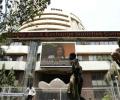
Investment bankers said retail investors were pulling back, while institutions were being pickier

Merrill Lynch jumps to first from 7th last year in a smaller market; says its focus is larger deals and clients.

Narendra Modi's diplomacy and persuasive prowess has ensured long-term investments from China and Japan.
 © 2026 Rediff.com - Advertise with us - Disclaimer - Privacy Policy - Sitemap - Feedback - About us - Terms of use - Grievances