
The wholesale price-based inflation declined to a 21-month low of 5.85 per cent in November on easing prices of food, fuel and manufactured items. After remaining in double digits for 19 months, the wholesale price index (WPI) based inflation declined to 8.39 per cent in October. The inflation was 14.87 per cent in November 2021. "Decline in the rate of inflation in November 2022, is primarily contributed by fall in prices of food articles, basic metals, textiles, chemicals & chemical products and paper & paper products as compared to the corresponding month of the previous year," the commerce and industry ministry said on Wednesday.

Congress spokesperson Abhishek Manu Singhvi cited a viral video on social media platforms, claiming that in it Modi's voice is heard in a call with BJP rebel Kripal Parmar.

FAO's Food Price Index is a monthly measure of change in international prices of 55 commodities.

The maximum fall was witnessed in dairy prices.
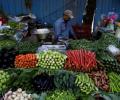
Retail inflation during the first month of the current fiscal stood at 2.9 per cent, down from 4.6 per cent a year ago. Food inflation based on Consumer Food Price Index declined to a low of 0.1 per cent during the financial year 2018-19, the survey said.
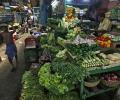
Inflation has reappeared as a global issue in both advanced and emerging economies and India needs to be wary of "imported inflation", especially due to high oil prices, according to the Economic Survey 2021-22 released on Monday. "Inflation has reappeared as a global issue in both advanced and emerging economies. "India's Consumer Price Index inflation stood at 5.6 per cent YoY in December 2021 which is within the targeted tolerance band," the survey report presented in the Parliament by Finance Minister Nirmala Sitharaman noted.

In May 2019, the food inflation was 1.83 per cent as per the full CPI data released for that period.

Global food prices rose by 1 per cent in March as compared to the previous month, driven mainly by an 11 per cent increase in dairy products.

Global food prices rebounded in January this year demonstrating the volatility in the international food markets, after falling for six months since July, 2011, United Nation's body FAO said on Friday.

Market breadth was positive, 1,733 stocks advanced, for 1,099 stocks which declined on the BSE.

According to the Food and Agriculture Organisation, global food prices fell for the first time after eighth consecutive months of price spikes in March this year in the wake of a decline in international prices of oil, sugar and cereals.
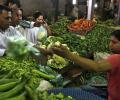
Costlier vegetables and eggs pushed up retail inflation to a nearly six-and-a-half year high of 7.61 per cent in October, keeping it significantly above the comfort zone of the Reserve Bank.
Annual food inflation has picked up for the second consecutive week, with the food price index rising 17.56 per cent in the 12 months till January 23, higher than an annual rise of 17.40 percent in the previous week, data released on Thursday showed. What may, however, lift spirits a little is the fact that the prices of pulses, a major contributor to spiralling food inflation, have declined over 40 per cent from their peak, on the back of rising arrivals and imports.

Pushed by rising prices of essential kitchen items, the retail inflation rose to an eight-month high of 7.34 per cent in September, making the RBI's task to push growth by reducing the interest rate even more difficult in coming the days. The Consumer Price Index (CPI)-based inflation was 6.69 per cent in August and 3.99 per cent in September 2019. Inflation has been hovering above 4 per cent since October 2019.

The Reserve Bank of India, which mainly factors in retail inflation to decide its monetary policy, has been tasked by the government to ensure the rate of price rise remains around 4 per cent.
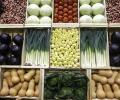
Higher local output estimated to depress cross-border sales
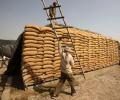
The fall in global prices resulted in a drastic decline in the Food Price Index compiled by the United Nations' Food and Agricultural Organization. Based on the prices of a basket of internationally traded food commodities, the FAO Food Price Index averaged at 203.9 points in July, down 4.4 per cent (2.1 percentage point) from a revised value in June. This level was seen earlier in January, at 203.2 points.
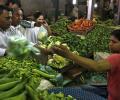
Declining vegetable prices brought down the retail inflation to a 15-month low of 4.59 per cent in December and within the comfort zone of the Reserve Bank, government data showed on Tuesday. It is for the first time during the current fiscal that the Consumer Price Index (CPI) based inflation print is below 6 per cent or in the RBI's target range of 2 to 6 per cent. The central bank factors in the CPI-based inflation while arriving at its monetary policy. The inflation in December 2020 came down from 6.93 per cent in November, mainly on account of 10.41 per cent decline in vegetable prices over the year-ago period.

Dairy, sugar prices fall sharply, despite El Nio fears
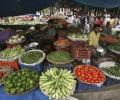
The pace of retail price rise in January 2016 is the highest since 6.46 per cent in September 2014.
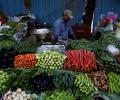
For protein rich items such as meat and fish, eggs as well as milk and products, the inflation in May slowed compared to last month
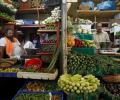
The decline in retail inflation has been mainly on account of falling prices of vegetables and pulses
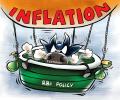
Currently, the retail inflation is well below the RBI's comfort level. The government has asked the central bank to keep inflation in the range of 4 per cent.

Retail inflation in April softened further and fell to a four-month low of 4.87 per cent.

Slowdown in industrial production notwithstanding, a marginal increase in inflation raised the clamour for another round of rate cut by the Reserve Bank on April 4 to boost economic activity.
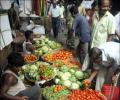
Trend could continue on downward revision in winter harvests.

Global Food Price Index showed a sharp jump in June.

PMO being sent daily updates on food cost situation in four major metropolitan cities to ensure no unusual flare-up.

It would also be the fifth month of consecutive drops in the index.

Policymakers have been grappling with high prices for food staples such as onions and potatoes even after the central bank raised interest rates by a quarter percentage point in each of its previous two reviews.
 © 2026 Rediff.com - Advertise with us - Disclaimer - Privacy Policy - Sitemap - Feedback - About us - Terms of use - Grievances