
With inflation turning negative, industry has been demanding interest rate cuts to propel demand. However, RBI Governor D Subbarao had said there is no threat of deflation as food and crude oil prices are still firm.
Rapid depreciation of the rupee put us in a vicious spiral: D Subbarao
To first take a position that the currency would be managed, and then to witness it fall, is a grave loss of credibility for any government, and for any central bank.
The Reserve Bank of India, in its first-quarter review of monetary policy, kept the benchmark policy rate constant at 8 per cent.
RBI's policy stance must address concerns over slowing output

To consider revising interest rates after RBI's review.

High deposit rates may put pressure on teaser home loan rates

The recently released RBI First Quarter Review of Monetary Policy 2009-10 and the accompanying 'Macroeconomic and Monetary Developments First quarter review 2009-10 have indicated that on the basis of Balance of Payments (BoP) the export growth for 08-09 has declined by over 22% to 5.4% and also the import growth has declined by over 21% during the same period.
Though interest rates have peaked, a hike in cash reserve ratio by the Reserve Bank of India cannot be ruled out in the first quarterly review of monetary policy later this month, a top official of a foreign bank said on Monday.

Amidst bankers and industry crying foul over RBI's move to squeeze liquidity, Reserve Bank Governor D Subbarao on Friday met Finance Minister P Chidambaram ahead of first quarter policy review next week.

Standard Chartered on Friday lowered India's growth forecast for the current financial year to 4.7 per cent from earlier 5.5 per cent, citing "upside risks" to inflation and fiscal deficit.

The HSBC India Composite Output Index, which maps both services and manufacturing activity, fell to 48.4 in July, down from 50.9 in June, indicating an overall contraction.

The HSBC/Markit purchasing managers index for the manufacturing industry stood at 50.1 in July, slightly more than 50.3 in June, indicating a broad stagnation of manufacturing operating conditions in India.

The Reserve Bank of India had taken steps to tighten liquidity in a bid to curb volatility in the forex market after the rupee fell to a record low of 61.21 to the dollar on July 8.
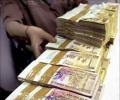
The steep fall in rupee came on a day when the Reserve Bank of India in its first quarter review of monetary policy kept the all key rates unchanged but cut the gross domestic growth forecast to 5.5 per cent for FY'14 from 5.7 per cent earlier.

The RBI's reluctance to cut rates should be seen as a case of inability in the face of inflation.
 © 2026 Rediff.com - Advertise with us - Disclaimer - Privacy Policy - Sitemap - Feedback - About us - Terms of use - Grievances