Troops of India and China were locked in a standoff in Doklam from June 16, 2017 after the Indian side stopped the building of a road in the disputed area by the Chinese Army.

The exercise 'Hand-in-Hand' between the armies of the two countries will take place within next 4-5 months in China.
The Chinese and the Indian troops were engaged in a standoff for 73 days in Doklam.

However, the government rejected the army's demand to implement the scheme with retrospective effect from June last year, when the Doklam face-off between Indian and Chinese armies had begun, official sources said.
Military officials said India is also strengthening its surveillance mechanism to keep an eye on Chinese activities along the borders in the strategically sensitive Tibetan region and has even been regularly deploying choppers to carry out recce.

Referring to the 73-day long Doklam standoff, the army chief warned that the situation could gradually snowball into a larger conflict on the northern border.

At the border personnel meeting, China also accused the Indian side of damaging its road building equipment when a road laying party left its gear in Tuting in December last year following a protest by India.
Some organisational changes are likely in some of the key army formations.

The 58-year-old Rajya Sabha MP will face several challenges, including strengthening of the combat capabilities of the army, navy and the air force due to changing regional security matrix and geo-political dynamics.

The army also stated that allocation of Rs 21,338 crore for modernisation is insufficient.

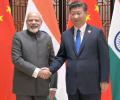
The prime minister, accompanied by senior officials including National Security Advisor Ajit Doval and Foreign Secretary S Jaishankar, met the Chinese leader just before his travel to Myanmar from this port city.

Air Chief Marshal said his force is ready for a full spectrum operation but added that any decision on surgical strike involving the IAF has to be taken by the government.
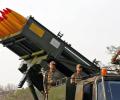
'Even though an India-China military conflict scenario seems unlikely, its possibility gets enhanced if our capabilities are seen to be inadequate by the adversary,' warns Vice Admiral Premvir Das (retd).

'Does the Indian army's new assertiveness risk a clash escalating into shooting and possibly skirmishes?' asks Ajai Shukla.
 © 2026 Rediff.com - Advertise with us - Disclaimer - Privacy Policy - Sitemap - Feedback - About us - Terms of use - Grievances