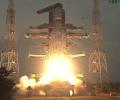
The heaviest communication satellite to be launched from the Indian soil onboard a new generation, homegrown 'Bahubali' rocket was successfully placed into the intended orbit on Sunday, the Indian Space Research Organisation said.
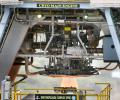
The Indian Space Research Organisation (ISRO) on Saturday said it has successfully conducted the flight acceptance hot testing of the cryogenic engine identified for the sixth operational mission of LVM3 launch vehicle (LVM-M6) at ISRO Propulsion Complex, Mahendragiri in Tamil Nadu.
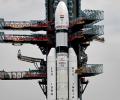
'The LVM3 rocket will orbit one Block 2 BlueBird satellite in Low Earth Orbit.'
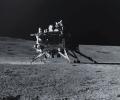
The cryogenic upper stage of the LVM3 M4 launch vehicle, which successfully injected the Chandrayaan-3 spacecraft into the intended orbit on July 14 this year, made an uncontrolled re-entry into the Earth's atmosphere, the ISRO said.

Narayanan has a long and distinguished career at ISRO, having played a key role in several important missions, including Chandrayaan-2 and 3, and the Gaganyaan programme.

ISRO chairman S Somanath said the success gave the space agency "greater confidence," as the GSLV will be next deployed in the NISAR mission, a collaborative effort with the US' NASA.

The rocket is almost 49 meters high -- as much as a 17-floor building. It weighs 415 tons -- as much as the combined weight of 80 full grown elephants.

Indian Space Research Organisation's second mission of the year to place an earth observation satellite by a GSLV rocket faced a setback as the mission could not be accomplished fully due to performance anomaly in the cryogenic stage of the rocket, the space agency said on Thursday.
The Indian Space Research Organisation (ISRO) on Monday successfully launched a second generation navigation satellite, using a GSLV rocket with a cryogenic upper stage to do the job.

The engine is earmarked for the LVM3-M3 mission identified for launching the next 36 OneWeb India-1 satellites, the Indian Space Research Organisation said.

The ISRO on Sunday scripted yet another history after its LVM3 rocket successfully placed 36 satellites of United Kingdom-based OneWeb group company into intended orbits.

The Indian Space Research Organisation on Thursday achieved a significant milestone in Mahendragiri, Tamil Nadu, when it successfully tested the indigenously developed Cryogenic Stage, to be employed as the upper stage of India's Geosynchronous Satellite Launch Vehicle.

The FAC found that the failure happened when the Geosynchronous Satellite Launch Vehicle rocket's cryogenic engine was to kick in to take the rocket forward.
Here are some things you must know about this significant launch and why this satellite is a big deal for India.
In the year gone by, Indian Space Research Organisation achieved self-reliance in launch vehicle technology with the successful ground testing of the Cryogenic Upper Stage, a key component in putting heavier payloads in orbit.

India's heavy-lift rocket GSLV MkIII, carrying communication satellite GSAT-19.

'When a Project Director is appointed, the whole organization -- including the Chairman ISRO -- works for his success. It is a lesson that has been of abiding value all through the other projects I have worked on,' recalls the late President, one of the earliest pioneers at ISRO.

A key feature of the satellite is providing mobile communication to India through multi beam coverage facility.
He also said it may be adopted for use in every stage of a rocket. He was speaking at the 16th convocation of SRM Institute of Science and Technology, near Chennai.

'ISRO is resilient enough to spring back and come with a solution quickly.'
Late on Monday night, in a last-minute revision of schedule, ISRO announced that the launch of India's second lunar mission 'Chandrayaan-2' has been called off due to a technical snag.
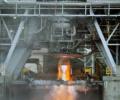
India's first indigenously designed and developed high-thrust cryogenic rocket engine generating a nominal thrust of 19 tonnes was successfully endurance hot-tested for 800 seconds.

ISRO Chairman K Sivan said there might by a postponement if the weather was not conducive.

Indian Space Research Organisation will announce a revised launch date later.

ISRO launched 12 Indian, 22 foreign satellites and successfully flight-tested India's first winged-body aerospace vehicle.

Global analysts say a successful launch of operational GSLV MkII rocket will reduce dependency for ISRO on foreign launchers.

The 3,423 kg GSAT-29 carries Ka and Ku band high throughput transponders intended to meet the communication requirements of users, including in the North East and in Jammu and Kashmir.

The mission life of the 2,250kg GSAT-7A, built by ISRO, is eight years. It will provide communication capability to users in Ku-band over the Indian region.

The Rs 978 crore mission, which has been rescheduled for Monday after scientists corrected the glitch in the rocket, will be launched at 2.43 p.m from the second launchpad at Satish Dhawan Space Centre, over 100 km from Chennai.

The satellite would provide a thrust to mobile communication through multi-beam coverage facility, the ISRO said.
 © 2026 Rediff.com - Advertise with us - Disclaimer - Privacy Policy - Sitemap - Feedback - About us - Terms of use - Grievances