
Indian stock market indices Sensex and Nifty experienced a significant decline, driven by rising crude oil prices, sustained foreign fund outflows, and selling pressure in major bank stocks.

The BSE Smallcap index hit an over eight-month low of 47,627.96, falling 3 per cent in Tuesday's intraday trade amid selling pressure due to ongoing tariff-related concerns and rising geopolitical tensions.
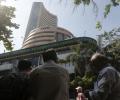
Leading stock exchange BSE on Monday cautioned investors to remain vigilant against deepfake video of its CEO giving stock recommendations and investment advice on social media platforms. The exchange emphasised that the video is unauthorised and fraudulent, and its officials are not permitted to provide any stock tips.

This guide will explain the options, what NSE and BSE options are and what differentiates them from each other.

Indian stock market indices Sensex and Nifty experienced a significant drop in early trade, reversing a three-day rally. The decline was triggered by a sharp increase in crude oil prices, weak global market trends, and continuous outflows of foreign funds.

Stock market is gearing up for an eventful week ahead where key triggers such as quarterly earnings from corporates, the US Fed interest rate decision and the upcoming Union Budget for 2026-27 would grab the limelight, analysts said.

Benchmark indices tumbled about 2 per cent on Friday, capping one of the most turbulent weeks for domestic equities as investors fretted that the West Asian conflict could drag on for weeks or even months.
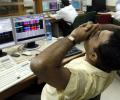
Indian equity investors experienced a significant loss of 16.32 lakh crore due to a two-day stock market decline fueled by escalating geopolitical tensions involving the US, Israel, and Iran.

Analysts predict that the ongoing conflict in West Asia, crude oil price fluctuations, and the US Federal Reserve's interest rate decision will significantly influence the Indian equity market this week.

Indian stock market indices Sensex and Nifty closed nearly 1 per cent higher, marking their third consecutive day of gains, supported by a slight decrease in crude oil prices and positive global market trends.

Indian equity markets experienced a volatile session, with the Sensex and Nifty recovering some ground after a significant plunge the previous day. Gains were driven by PSU bank, IT, and metal stocks, but concerns over rising fuel prices and geopolitical tensions limited the recovery.
Indian stock market benchmark indices Sensex and Nifty experienced a significant drop in early trade due to rising crude oil prices, bearish global market trends, and continuous foreign fund outflows.

The BSE Sensex and the Nifty 50 declined around 4.5 per cent each since the start of the West Asia conflict.

Governance uncertainty and leadership visibility gap are likely to keep the stock under pressure in the near term, said Nomura in a report.

Indian stock market benchmarks Sensex and Nifty rebounded by over 1% on Monday, driven by value-buying in banking stocks after a three-day slump. Key gainers included UltraTech Cement, HDFC Bank, and Mahindra & Mahindra.

Indian benchmark stock indices Sensex and Nifty rallied for the second consecutive day, closing nearly 1 per cent higher, driven by gains in metal and auto sectors and positive global market trends.

Authorities in Mumbai are investigating an email threatening bomb attacks on key buildings, including the Vidhan Bhavan and the Bombay Stock Exchange (BSE). Security has been heightened, and officials are working to trace the origin of the threat.

Indian equity markets experienced a significant downturn, with the Sensex and Nifty plummeting due to rising crude oil prices, geopolitical tensions in West Asia, and continuous foreign fund outflows.

Indian equity markets experienced a significant downturn as geopolitical tensions in West Asia, rising oil prices, and foreign fund outflows dampened investor confidence. The Sensex and Nifty both fell sharply in early trade, reflecting broader global market weakness.

HDFC Bank's leadership addresses the sudden resignation of its chairman, citing ethical concerns, and attempts to reassure stakeholders about the bank's governance and future stability.
Indian benchmark equity indices experienced a significant downturn, with the Sensex plummeting over 800 points and the Nifty falling sharply, driven by rising crude oil prices, geopolitical tensions, and foreign capital outflows.

The BSE Sensex plummeted 1,236 points, wiping out nearly Rs 7 lakh crore in investor wealth, driven by escalating tensions between the US and Iran and subsequent market selloff.

India has lost its $5 trillion market capitalisation (mcap) tag following Monday's sharp selloff in equities and a simultaneous slide in the rupee.
Indian stock market benchmarks Sensex and Nifty rebounded strongly after a two-day decline, driven by falling crude oil prices and positive global cues amid hopes of de-escalation in the Middle East.

Indian benchmark stock indices Sensex and Nifty rebounded, closing over 1% higher, mirroring a global equities recovery after recent losses due to geopolitical tensions.
The BSE Sensex has been one of the top-performing areas of investment in the past 40 years, consistently delivering double-digit returns in rupee terms, beating assets such as global equities, precious metals, and fixed income.
Indian stock market benchmark indices Sensex and Nifty experienced a significant decline, driven by escalating tensions in the Middle East and rising crude oil prices.

In the present hyper-connected world, there are many domestic and global factors that affect financial markets. Of them, the most powerful and often least predictable are geopolitical events, which often boil down to one diplomatic headline.
Benchmark equity indices Sensex and Nifty tumbled in early trade on Wednesday, tracking a bearish trend in Asian markets, as the conflict in West Asia widened, driving oil prices higher.
Indian equities on Dalal Street saw volatility as global market trends and fresh tariff concerns linked to Donald Trump impacted investor sentiment. Track Sensex, Nifty50 movement and key market drivers for Feb 24, 2026.
Equity benchmark indices Sensex and Nifty experienced a significant decline, primarily driven by a selloff in IT stocks due to concerns about AI disruption and renewed worries over global trade.

Shares of Waaree Energies and Premier Energies are under pressure after the US imposed initial duties on Indian solar imports. The article examines the impact on green energy stocks and market sentiment.
Benchmark BSE Sensex fell 558 points on Thursday amid heavy selling in IT shares, as concerns over AI-led disruptions and waning hopes of a Fed rate cut after firm US economic data weighed on investor sentiment.
Indian benchmark equity indices Sensex and Nifty experienced a significant crash in early trade, triggered by a sharp increase in crude oil prices and escalating tensions in the Middle East.

Sensex and Nifty post steepest weekly loss in over a year, falling nearly 3 per cent.
Stock markets closed higher for the second straight session on Tuesday, driven by gains in bank, IT and capital goods shares.

The market capitalisation of BSE-listed companies eroded by Rs 9,40,581.75 crore to Rs 4,50,61,658.60 crore (USD 4.90 trillion) in a single day.
Benchmark indices Sensex and Nifty experienced a significant decline, falling over 1 per cent due to foreign fund outflows and global uncertainties.

Indian equity markets experienced a volatile trading day, with the Sensex and Nifty closing almost flat. Market sentiment was influenced by global cues, US-Iran talks, and profit-booking activities.

Indian equities on Dalal Street saw volatility. Track Sensex, Nifty50 movement and key market drivers for Feb 25, 2026.
 © 2026 Rediff.com - Advertise with us - Disclaimer - Privacy Policy - Sitemap - Feedback - About us - Terms of use - Grievances