
The attack on Rushdie sent shock waves around the world, with world leaders and literary stalwarts saying they were appalled at the attack on the author who championed free speech and lived under the threat of assassination for nearly half his life.

One of two Indian Americans honorees Dr Deepak Srivastava is the director of the Gladstone Institute of Cardiovascular Disease and Wilma and Adeline Pirag Distinguished Professor in Pediatric Developmental Cardiology at the University of California at San Francisco.

The actress was named honorary member of American Academy of Arts and Letters.
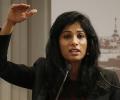
Announcing her appointment, IMF Managing Director Christine Lagarde hailed the Mysore-born Gopinath as "one of the world's outstanding economists with impeccable academic credentials, a proven track record of intellectual leadership and extensive international experience".

Subra Suresh is one of the only 16 living Americans to be elected to all three national academies, the IOM, the National Academy of Sciences and the National Academy of Engineering.
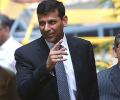
Giving details of Rajan's 'course schedule' for 2016-17, Chicago Booth School said this course will explore the challenges of corporate finance and investment in a more integrated global economy.

'It looked as if India had been a major player in science at that time, raising the question when and why things changed,' says distinguished aerospace scientist Professor Roddam Narasimha.

'Some Indians take the extreme view that everything was known to our ancients, but others go to the opposite extreme and consider everything Indian was superstition and rubbish.' 'Indian science was perhaps more rational than the European science of the time.'

Indra Nooyi joins several prominent persons of Indian-origin who have donated generously to US universities.

'Temperature and wind can be predicted more easily than rainfall.' 'Rainfall, as common experience suggests, is very spotty.' 'The last bit of physics required that tells us whether it is going to rain or not is very hard.' Professor Roddam Narasimha, the eminent scientist, explains the monsoon, climate change and global warming, in a fascinating conversation with Shivanand Kanavi.

'It affects our economy, it is very important in many ways.' 'So we have to be the foremost experts in the world on the monsoon.' 'But the best minds in India have not devoted their time to the study of monsoon and they have followed the fashions of the West.'

Can we make high speed 4G Internet available at 10 cents per GB, and make all voice calls free of cost -- that too in a large and diverse country like India? Can we make high-quality but simple breast cancer screening available to every woman, that too at the extremely affordable cost of $1 per scan? Can we make a portable, high-tech ECG machine which can provide reports immediately and that too at the cost of 8 cents a test? Can we make an eye imaging device that is portable, non-invasive and costs 3 times less that conventional devices? Can we make a robust test for mosquito-borne dengue, which can detect the disease on day 1, and that too at the cost of $2 per test? Amazingly, says Dr R A Mashelkar, the eminent scientist, all this has been achieved in India, not only by using technological innovation but also non-technological innovation.
 © 2026 Rediff.com - Advertise with us - Disclaimer - Privacy Policy - Sitemap - Feedback - About us - Terms of use - Grievances