
The power sector presents a puzzle. A fast-growing economy should be aligned to higher power demand but that hasn't been the case in the financial year 2026 till date (FY26TD).

Recently, the government relaxed foreign direct investment (FDI) norms for the space sector by allowing 100 per cent FDI in manufacture of components, systems or sub-systems for satellites, ground segments, and user segments. It also permitted 74 per cent FDI in satellite manufacturing and operation as well as satellite data products and 49 per cent in development of launch vehicles and spaceports. Following this, stocks of related companies saw an uptick on the bourses.
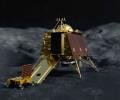
A number of private companies have contributed to the development of ISRO's Chandrayaan-3 spacecraft which successfully landed near the south pole of the Moon on Wednesday evening.

Govt to play enabler not handler, India never had more decisive government: PM Modi Prime Minister Narendra Modi on Monday cited his dispensation's push for wide-ranging reforms, including the privatisation of Air India, to assert that the country never had a more "decisive government". Launching the Indian Space Association (ISpA), an industry body aspiring to be the voice of the country's space sector, Modi noted that fields like mining, coal, defence and space have been opened to private players, and said his government's clear policy about public sector enterprises is to open those to private industry where its presence is not required. While opening a host of sectors, the government has built a regulatory environment in which priority has been given to national interest as well as the interests of different stakeholders, he said.

Government think-tank body Niti Ayog CEO Amitabh Kant supported the industry demand and called for setting up of a single window clearance system for expeditious approval of projects. Start-ups and small medium enterprises requested the prime minister to provide support in low-cost capital at the virtual launch of space and satellite industry body Indian Space Association (ISpA).

At 11:37 am, the S&P BSE Sensex was up 28 points at 27,037 and the Nifty50 was up 2 points at 8,268

Global analysts say a successful launch of operational GSLV MkII rocket will reduce dependency for ISRO on foreign launchers.

Stocks might hit new highs even before B-Day.

The 30-share Sensex ended 79 points lower at 26,909 and the 50-share Nifty closed 25 points lower at 8,102.
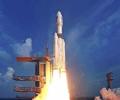
If successful, this would increase capacity to hurl small satellites into space, meeting both local demand and serving global customers.

Indices reversed all its losses during late trades.
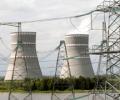
Under a 2010 nuclear liability law, nuclear equipment suppliers are liable for damages from an accident, which companies say is a sharp deviation from international norms

With the launch of the first indigenous aircraft today, India will join a club of nations like the United States, Russia, China, the United Kingdom and France that possess nuclear-powered submarines
 © 2026 Rediff.com - Advertise with us - Disclaimer - Privacy Policy - Sitemap - Feedback - About us - Terms of use - Grievances