The Supreme Court of India will hear a plea from the mosque management committee challenging an order rejecting its petition in the Krishna Janmabhoomi-Shahi Idgah dispute in Mathura, Uttar Pradesh on January 15. The Allahabad High Court had rejected the mosque committee's plea, stating that the religious character of the Shahi Idgah mosque needed to be determined. The case involves claims that the mosque was built after the demolition of a temple, a claim disputed by the mosque committee. The Supreme Court will now decide on the maintainability of the mosque committee's plea.

The Hindu litigants claim the mosque holds signs suggesting that it was a temple once.
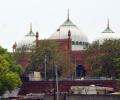
The court said the modalities of the survey will be discussed at the next hearing on December 18.
The objections against the suit were raised by the management committee of the mosque and the Uttar Pradesh Sunni Central Waqf Board.
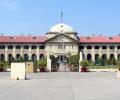
The Supreme Court on Monday directed authorities to remove a mosque from the premises of the Allahabad high court within three months, telling the petitioners that opposing the demolition that the structure stood on a terminated lease property and they can't claim it as a matter of right to continue.
The apex court rejected an appeal challenging a July 10 decision of the Allahabad high court which had also dismissed the plea finding no error or illegality in the order of a Mathura civil judge who had decided to first hear the issue of maintainability of the suit as raised by management committee of the mosque.

Describing the Waqf Board decision as "not in the interest of Taj Mahal," a representative of the Archaeological Survey of India, who attended the hearing, said it would challenge it in the court of law.

The hearing of the civil suit filed in a Mathura court seeking ownership of the entire 13.37 acres of Krishna Janmabhoomi land has been adjourned till December 10, after the plaintiff in the case, Shri Krishna Janmabhoomi Trust, failed to appear before the court on Wednesday.

The court asked the UP govt to get examined the disputed premises by a five-member team of the ASI at its expense.

The verdict by a special court in the Babri Masjid demolition case comes 28 years after kar sevaks razed the 16th century mosque and almost a year after the Supreme Court settled the land case in favour of a Ram temple at the disputed Ayodhya site.
Justice Padia stayed the Varanasi civil court order, ruling that the subordinate court passed its order ignoring the fact that the high court had reserved its verdict on the plea challenging the maintainability of the suit which had been filed earlier in the lower court for the survey.

Rizvi along with some Mahantas from Ayodhya will also approach the Supreme Court before December 5 with a solution to the Ram Janmabhoomi-Babri Masjid dispute.
The lawyers said the mediation panel's report was leaked to the media and they do not approve the procedures adopted in the process and the suggested compromise formula of withdrawal of the lawsuit.
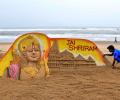
The following is the chronology of events related to the Ram Janmabhoomi-Babri Masjid land dispute in which, after the Supreme Court verdict, Prime Minister Narendra Modi on Wednesday conducted the 'Bhoomi Pujan' or ground breaking ceremony and laid the foundation stone for the temple's construction.
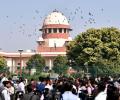
highlights of the Supreme Court judgment in which it unanimously granted the entire 2.77 acre of the disputed Ram Janambhoomi-Babri masjid land in Ayodhya to deity Ram Lalla.

'How can someone who has never been associated with the movement and never had darshan of Ram Lalla mediate on the matter of temple construction? We have gone to jail for it, faced house arrest and have been fighting court cases. Sri Sri does not qualify to mediate on the matter.'

Senior advocate Rajeev Dhavan, representing the Muslim parties in the case, tore up a pictorial map.
 © 2026 Rediff.com - Advertise with us - Disclaimer - Privacy Policy - Sitemap - Feedback - About us - Terms of use - Grievances