
Police said they have seized a large haul of explosives, a drone and a banner with the Islamic State logo.

Seven persons had been arrested in connection with the blasts.

The blasts -- one of the deadliest attacks in the country's history -- targeted St Anthony's Church in Colombo, St Sebastian's Church in the western coastal town of Negombo and Zion Church in the eastern town of Batticaloa around 8.45 am (local time) as the Easter Sunday mass were in progress.
Security has been beefed up in Sri Lanka as the army increased its deployment by 1,300 to 6,300.

The commander said that by looking at the pattern of operation and the places that the suspects travelled, there has to be some outside involvement of some leadership or instructions.

Father Edmond Tillekeratne, social communications director for the Archdiocese of Colombo, said that the blast took place after Easter Mass, and that there were about 30 bodies lying in the area of the church.
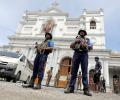
'The blasts in Lanka are against our ideology.'

The suspicious van was wanted over the terror attacks and was taken into custody at Sungavila.

The names of both Maregowda and Puttaraju had figured in the list of missing Janata Dal-Secular workers tweeted by Chief Minister H D Kumaraswamy on Monday.

The National Tawheed Jamath is suspected of plotting the deadly Easter blasts.

Several people succumbed to their injuries sustained in the blasts, taking the death toll to 359.

Forty suspects, including the driver of a van allegedly used by the suicide bombers, have been arrested in connection with the attacks which shook Sri Lanka.

-- Seven suicide bombers believed to be members of an Islamist extremist group carried out the series of explosions. -- Police have so far arrested 24 people - mostly members of an Islamist extremist group - in connection with the blasts

National flags were lowered and people bowed their heads as the silence began at 8:30 am local time, the time the first of the attacks occurred on Sunday.
Authorities also released photographs of six suspects, including three women, wanted for their involvement in the attacks and sought information regarding them from the public.

Even as the polity find ways and means to address the genuine concerns and fears of the society, the Sri Lankan State apparatus would have to unravel these mystery-questions with convincing answers, and a road-map to the future, says N Sathiya Moorthy.
 © 2026 Rediff.com - Advertise with us - Disclaimer - Privacy Policy - Sitemap - Feedback - About us - Terms of use - Grievances