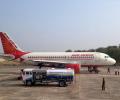
Management and leadership changes, in addition to synchronising operations between all its airlines, are showing visible results for Air India. Data from the Directorate General of Civil Aviation (DGCA) show that there has been a marked improvement in key operational parameters of Air India after the Tata group took complete control of the national airline in January. One of the most dramatic improvements has been noticed in Air India's passenger load factor (PLF) - a crucial metric of capacity utilisation of an airline's fleet that shows how many seats it has been able to fill on every flight.

The new airline will leverage business class seats to improve yield per passenger and fly only to big cities.
Once pioneers in civil aviation, the Tata group is unlikely to get into the sector because of "destructive competition", its outgoing Chairman Ratan Tata said.
Engineers of the Indian Airlines threatened to launch an agitation against the proposed JV between IA and Singapore International Airlines for maintenance, repair and overhauling of aircraft, including those of foreign airlines in India.
In a significant development, Singapore International Airlines and domestic flag carrier Indian Airlines have joined hands to explore the formation of a joint venture for maintenance, repair and overhauling of aircraft

Tata's Vistara has a very strong core team to look into daily operations.

India perhaps is the only market in the world where full-service and low-cost fares have become one.

Vistara is keen to take to global skies.

DGCA asks those likely to be affected by a scheduled air operator's permit to the airline to give suggestions, objections within 30 days.

Recruitment and import of aircraft still to get going
Vistara has fine-tuned strategies to tap the elite class and Jet Airways may lose out on market share in times to come.
 © 2026 Rediff.com - Advertise with us - Disclaimer - Privacy Policy - Sitemap - Feedback - About us - Terms of use - Grievances