
Investors encountering underperformance must be patient.

'Stopping now would defeat the core purpose of an SIP, which is to average out the purchase cost over market cycles.'

'Sebi's move to cap brokerage charges will help investors by lowering the overall cost of investments.'

The share of investments held by the top 10 investors across smallcap mutual fund schemes has been on a decline, falling to a 14-month low in March 2025, shows an analysis of data from the Association of Mutual Funds in India (Amfi). The median smallcap scheme has 2.03 per cent of its investments coming from the top 10 investors, compared to 2.43 per cent a year ago.

One should avoid keeping excessive funds in one's savings account.

Debt mutual fund (MF) schemes are set to register the best calendar year (CY) performance in the last four years despite no changes in the interest rate. An analysis of one-year performance of debt funds show that many of the schemes are set to deliver double-digit returns in CY 2024.

Mid-cap and small-cap mutual fund schemes have continued to attract strong investor interest, garnering nearly Rs 30,350 crore in inflows during the April-September period of the current financial year, driven by impressive returns delivered by these segments. In comparison, the cumulative inflow into mid-cap and small-cap funds stood at Rs 32,924 crore during the same period last year, according to data from the Association of Mutual Funds in India (Amfi).

Returns of liquid funds are meant only for the short term and don't help investors create wealth over the long term, as equity funds do.

When evaluating bonds, returns shouldn't be the sole factor. Pay close attention to the bond's credit rating. It should ideally be AA or higher.

To minimise risk, invest in a debt fund whose duration matches your investment timeframe.

'In the short term you keep your return expectations very, very low; in the medium term be prepared to invest and in the long term growth will come and your returns from stocks will be high.'

'Your decisions should not be driven by your view on the market, but by your objectives, risk appetite, and time horizon.'
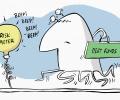
Fund managers often find themselves selling bonds at prices below their fair value to meet redemption demands. Investors are the ultimate losers in this. CDMDF aims to remedy this by stepping in and purchasing securities at their fair value in such times.

Investors who decide to enter medium to long-duration funds should be cognisant of the risk.

The returns from liquid funds, currently, look better than what savings accounts of leading banks are offering, points out Sarbajeet K Sen.

The Reserve Bank's rate-setting panel began its three-day deliberations on Monday to decide the next monetary policy amid expectations that the central bank will maintain status quo on the benchmark interest rate in the backdrop of global scare due to the new coronavirus variant Omicron. Reserve Bank Governor Shaktikanta Das headed six-member Monetary Policy Committee (MPC) is scheduled to announce the policy resolution on Wednesday. If the RBI maintains status quo in policy rates on Wednesday, it would be the ninth consecutive time since the rate remains unchanged.

The Reserve Bank's rate-setting panel, Monetary Policy Committee (MPC), began its three-day deliberations on Wednesday amid expectations of a status quo on benchmark rate mainly on account of uncertainty over the impact of the second wave of COVID-19 pandemic. Moreover, the fears of firming inflation may also refrain the MPC from tinkering with the interest rate in its bi-monthly monetary policy outcome to be announced on Friday. The RBI had kept key interest rates unchanged at the last MPC meeting held in April.

Investing merely on the basis of past return can land you in trouble even in debt funds, a supposedly safe asset class, suggests Sarbajeet K Sen.

The RBI kept interest rates unchanged at 8 per cent as widely expected.
 © 2026 Rediff.com - Advertise with us - Disclaimer - Privacy Policy - Sitemap - Feedback - About us - Terms of use - Grievances