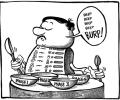
Mumbai hotels and restaurants are facing potential closures due to a critical shortage of commercial LPG cylinders, with similar disruptions reported across India. The crisis stems from revised government priorities for domestically produced natural gas, impacting the hospitality sector and potentially affecting tourism.

Indian restaurants are grappling with a severe LPG shortage due to the West Asia conflict, forcing them to innovate with menus and cooking methods or face potential closures, impacting the food industry and consumers across the country.
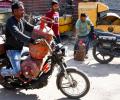
The government has introduced a mandatory 25-day gap between LPG cylinder bookings due to supply concerns arising from global disruptions and tensions in the Strait of Hormuz. This measure aims to prevent hoarding and prioritise essential non-domestic sectors, while domestic LPG production is being increased to mitigate shortages.

Hotel room rates in Ahmedabad have increased significantly ahead of the India-New Zealand T20 World Cup final, with some tariffs rising by 300-400%. The surge is driven by high demand from cricket fans travelling to the city for the match.
Hotel room rates in Ahmedabad have increased significantly ahead of the India-New Zealand T20 World Cup final, with some tariffs rising by 300-400%. The surge is driven by high demand from cricket fans travelling to the city for the match.

What we are watching is something different: A fog manufactured and maintained by the people who started the war, so that the question of why it was started never has to be answered, observes Prem Panicker in his must read blog on the war in the Middle East.

'This is not a case of tax evasion but the result of long-standing ambiguities in GST rules and unawareness.'

The GR says that shops and commercial establishments may remain open on all days of the week, provided that every employee is allowed a continuous rest period of at least 24 hours in a week.

Dining today isn't just about food -- it's about the experience and the story.
The court upheld the guidelines and imposed Rs 1 lakh cost each on the petitioners to be deposited with the CCPA towards consumer welfare.

The restaurant chains are riding the Hallyu wave -- a phenomenon about the growing global prominence of South Korean pop culture.

A group of people set fire to an ISKCON temple in Dhaka district in Bangladesh in the early hours of Saturday.
A Competition Commission probe has found that food delivery platforms Zomato and Swiggy indulged in unfair business practices, including alleged preferential treatment to some restaurant partners, according to sources. The detailed investigation was ordered by the Competition Commission of India (CCI) in April 2022 and the probe report was submitted to the regulator earlier this year. Under the norms, CCI director general's report has been shared with the parties concerned and later, they will be called for hearings by the watchdog.

Sri Annapoorna Hotel on Saturday appealed to the people to put to rest unnecessary assumptions and political misunderstanding after a video of its owner apologising to Union Finance Minister Nirmala Sitharaman over his remarks on Goods and Services Tax (GST) went viral on September 13.
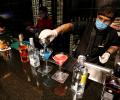
The plea is likely to be heard on Wednesday by a vacation bench.
Indian food services sector is expected to grow at a CAGR (compounded annual growth rate) of 8.1 per cent between 2024 and 2028 on the back of rapid urbanisation, robust GDP growth, a rising younger population, and greater exposure among consumers, said a new report. The India Food Services Report-2024, brought out by the National Restaurants Association of India (NRAI), states that the sector contributes 1.9 per cent to India's GDP and is projected to grow to Rs 7.76 trillion by 2028 from Rs 5.69 trillion currently.
"Let's work it out. There has to be some parity," the high court said.
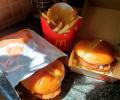
In the first quarter (Q1) of the ongoing financial year ending June 30, Westlife Foodworld, which operates McDonald's outlets in the South and West, reported an 88 per cent drop in net profit. While net sales remained flat, its same-store sales growth (SSSG) fell by 6.7 per cent, impacted by "subdued in-store business, although the off-premise segment saw positive same-store sales", the company said.

'As the city grows, so do its fire incidents.'
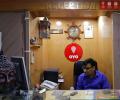
IPO-bound hospitality major OYO has written to the Ministry of Tourism (MoT) requesting it to intervene and investigate the running of the Federation of Hotel and Restaurant Associations of India (FHRAI) and order eviction of erring executive committee members. The hotel aggregator urged the MoT to take necessary action against FHRAI's "illegally run" Executive Committee and its members who are working for self-interest instead of that of small hotel owners. The representation by OYO alleged that FHRAI's actions are detrimental to small hotel owners.

Hotel room tariff in Ahmedabad, airfares shoot up ahead of India-Australia final

The Delhi high court on Wednesday stayed the recent guidelines prohibiting hotels and restaurants from levying service charge automatically on food bills. Justice Yashwant Varma, while dealing with petitions by the National Restaurant Association of India (NRAI) and Federation of Hotels and Restaurant Associations of India challenging the Central Consumer Protection Authority (CCPA)'s July 4 guidelines, said the issue requires consideration and directed the authorities to file their reply. "The matter requires consideration. Consequently, until the next date of listing the directions as contained in para 7 of the impugned guideline of July 4, 2022 shall remain stayed," the court ordered.

According to the revised policy, guests should not be permitted to drink alcohol unless served by the cabin crew and that the cabin crew be attentive to identifying guests that might be consuming their own alcohol.

The tourism industry expects a short-term impact, as it is counting on the state's proven expertise in managing such crises.
The National Company Law Appellate Tribunal (NCLAT) on Tuesday stayed a Rs 169 crore penalty imposed on Oravel Stays Ltd by the competition commission of India (CCI). Oravel Stays Ltd operates under the brand name Oyo. However, a two-member NCLAT bench while admitting the appeal filed by Oravel Stays Ltd (OSL) directed to deposit of 10 per cent of the penalty amount within six weeks.
The National Restaurant Association of India has written an advisory to its members against Zomato Pay and Swiggy Diner discount programmes saying these are against the interest of restaurant owners. The advisory alleges that 'middlemen' Zomato and Swiggy are making money at the cost of restaurants, who sign up to be on the Zomato Pay and Swiggy Diner programmes by making them compulsorily offer discounts and also pay commission fee on every transaction on these platforms. "Zomato Pay and Swiggy Diner both operate broadly on the same construct -- no cost/subscription fee to the customer to participate; restaurants must compulsorily offer a discount in the range of 15-40 per cent to be part of the program," NRAI wrote to its members.

After the Covid-19 pandemic that derailed the economy since 2019, the Durga Puja festival in West Bengal is back with an estimated 20-30 per cent jump in festive spending. Retail sector is the key contributor to the state's Durga Puja economy which was Rs 32,377 crore in 2019, according to a British Council study conducted for the state government. Retail accounts for 85 per cent of the total puja economy and the rest is shared among pandal making, decoration, illumination, entertainment, advertisement, food & beverage and others.
Competition Commission on Monday ordered a detailed probe against food delivery platforms, Zomato and Swiggy, for alleged unfair business practices with respect to their dealings with restaurant partners. The order has come on a complaint filed by the National Restaurant Association of India (NRAI). The watchdog's probe arm -- Director General (DG) -- will investigate the case.

With hotels and restaurants being barred from levying service charge, waiters, chefs and other workers are worried they will lose out on money and are planning to approach managements to seek a pay raise. They are also apprehensive that tips given by customers out of goodwill will dwindle. Uttarakhand-native Prakash Singh Koranga, 27, a chef who works at an outlet of popular franchise Moti Mahal Deluxe restaurant in south Delhi, said service charge which gets proportionally divided among the staff acts as an "extra income" and "incentive to give our best at the job".

The hospitality and tourism sector is among the worst hit because of the pandemic, and is unlikely to recover any time soon as people continue to be cautious of going out in a crowded places.

It is the season of cooking and baking, but with Amul Butter in short supply, consumers aren't like the cat that got the cream. A shortage only means market shelves without butter on them. "There is a supply-side deficit. "We are now able to procure only two packs of butter a day, as opposed to three packs (each containing 30 packets of butter) in a day," says a salesman at Modern Bazaar, a departmental store in New Delhi's Greater Kailash.
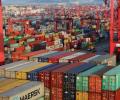
Exporters on Thursday demanded fiscal incentives, tweaking in customs duties on certain products and credit at affordable rates in the forthcoming Budget to boost exports and create jobs. In a pre-budget virtual meeting with Finance Minister Nirmala Sitharaman, the Federation of Indian Export Organisations (FIEO) said the depreciation of the rupee against the US dollar is affecting exports' competitiveness and the sector requires more support. "Creation of employment is the biggest challenge faced by the country...We would urge the government to provide fiscal support to units which provide additional employment in the export sector," the exporter's body said.

The domestic hospitality industry is looking to 'fly' in 2023 cashing in on India's G20 presidency, having received the 'oxygen' to run in 2022 after being crippled in the past two years by the pandemic. Domestic travel, especially the leisure segment, gave wind to the industry this year and is expected to continue into the next. Industry players believe that as international arrivals are also likely to pick up even further, the outlook for 2023 is buoyant.
A Siliguri-based hotelier has challenged a National Company Law Appellate Tribunal (NCLAT) ruling that closed insolvency proceedings against OYO and one of its units, in the Supreme Court. The hearing is scheduled for September 13 before a two-judge Bench. Oyo did not immediately respond to a request for comment.

'The option to re-open restaurants comes as a big relief to restaurateurs. Although, it is a good development, not all restaurants are geared up to re-open immediately. 'We expect only around 30 per cent of the restaurants to open starting Monday and the rest will re-open gradually through the month,' Hotel and Restaurant Association of Western India (HRAWI) senior vice-president Pradeep Shetty said in a statement.
When the sun rises in 2022, the Indian hospitality industry will be waking up with prayers for survival, desperately looking forward to some form of support from the government as revival from the impact of the coronavirus pandemic of the last two years will be an arduous journey. Just as the industry was beginning to see a flickering light at the end of a long tunnel towards the end of 2021, the spread of the Omicron variant of coronavirus and subsequent extension of suspension of scheduled international passenger flights till January 31, 2022, has come as a dampener to those who were looking to have some business in the winter season. With inbound tourist arrivals unlikely amidst the pandemic, the industry wants the government to incentivise domestic travels with income tax benefits for a limited period so as to help the hospitality and tourism sector get up again by tapping the pent up demand for holidays, within the country.
The government on Monday asked online food business operators like Swiggy and Zomato to submit a proposal within 15 days on improving their consumer grievance redressal mechanism amid rising complaints from customers. The department of consumer affairs directed e-commerce FBOs "to transparently show consumers the breakup of all charges included in the order amount such as delivery charges, packaging charges, taxes, surge pricing etc." According to an official statement, "The Department of Consumer Affairs has directed major e-commerce Food Business Operators (FBOs) to furnish the current framework as well as a proposal on improving the consumer grievance redressal mechanism within 15 days."
"It went up to 20-odd per cent in 2019 and to 25 per cent a year later. "That's when we decided to pull the plug; it was not sustainable for our business," says Chadha. Madison & Pike, instead, turned to Mumbai-based start-up Thrive, which provides third-party delivery services to restaurants at a much lower commission - three to five per cent.
Amid rising consumer complaints, the Central Consumer Protection Authority (CCPA) on Monday barred hotels and restaurants from levying service charge automatically or by default in food bills and allowed customers to file complaints in case of violation. The CCPA has issued guidelines for preventing unfair trade practices and violation of consumer rights with regard to levying of service charge. "No hotels or restaurants shall add service charge automatically or by default in the bill," CCPA chief commissioner said in the guideline.
Alleging "anti-competitive practices" by Zomato and Swiggy, restaurant industry body National Restaurant Association of India (NRAI) on Monday said it has approached fair trade regulator Competition Commission of India (CCI) for a detailed probe against the food aggregators. Keeping the interests of restaurants in mind, NRAI on July 1 had filed information with the CCI, it said in a statement. The main issues highlighted by the association in the submission are bundling of services, data masking, and exorbitant commission charged, price parity agreements, deep discounting, including forcing restaurant partners to give discounts to maintain appropriate listing, exclusivity of listed restaurants, and violation of platform neutrality, vertical integration, and lack of transparency on the food ordering platforms.
 © 2026 Rediff.com - Advertise with us - Disclaimer - Privacy Policy - Sitemap - Feedback - About us - Terms of use - Grievances