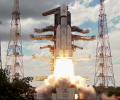
New data from India's Chandrayaan-3 mission suggests that ice might be present at more locations on the Moon's surface than previously believed. The study, published in Communications Earth and Environment, analyzed temperature data collected by the ChaSTE probe onboard the Vikram lander. The researchers found that significant variations in surface temperatures can influence the formation of ice, with slopes angled away from the Sun potentially providing favorable conditions for ice accumulation. The findings have implications for future lunar exploration, suggesting that water-ice resources could be more accessible than previously thought.

The crater was formed during the Nectarian period, which dates back to 3.85 billion years and is one of the oldest time periods in the Moon's history, the team, including researchers from the Physical Research Laboratory and Indian Space Research Organisation (ISRO), Ahmedabad, said.
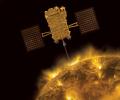
Data collected around L1 would provide insights into the origin, acceleration, and anisotropy of solar wind and space weather phenomena, it said.

According to the space agency, Chandra's Surface Thermophysical Experiment measured the temperature profile of the lunar topsoil around the south pole, to understand the thermal behaviour of the Moon's surface.
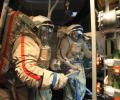
Finance Minister Nirmala Sitharaman on Wednesday allocated nearly Rs 12,544 crore to the department of space as India plans a human spaceflight -- Gaganyaan -- next year and sets out to explore the moon and neighbouring planets.
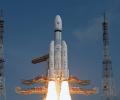
He said the test vehicle is ready at Sriharikota and the assembly work of the crew module and crew escape system has also begun.

The hollow metal spheres, each of about 1.5 feet diameter, fell between May 12 and 13 in Dagjipura, Khambholaj and Rampura villages of Anand district and Bhumel village of neighbouring Kheda district

I suggest we build a Vigyan Mandir (Temple of Science) with the ambience of a place of worship, so that it becomes a destination for pilgrims. We should embed on its walls bronze plaques describing each scientist mentioned here along with about a dozen of our ancient mathematicians, recommends Professor Kalyan Singhal, historian of science and technology.

Dr Rao accelerated the development of rocket technology which led to the successful launch of ASLV and PSLV satellites.

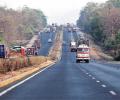
The NGT had constituted a committee headed by a former Uttarakhand high court Judge to monitor the project.

While the Mars mission got wide praise, there were voices which questioned the need for spending Rs 450-500 crore on it when the country is facing hunger and poverty.

'What is the future of ISRO?' Professor Rao asked from his hospital bed. 'What we see now is the continuation of programmes we started long ago.' 'What are we planning in the space science arena?' 'What is our plan for human space flight?' Former ISRO chairman Madhavan Nair recalls his last meeting with Professor U R Rao, the pioneering Indian space scientist who passed away on Monday, July 24.

'The unique achievements have been made by engineers from small towns who have had a non elite upbringing and who have grown with the programme,' says R Aravamudan, one of the pioneers of the Indian space programme.
 © 2026 Rediff.com - Advertise with us - Disclaimer - Privacy Policy - Sitemap - Feedback - About us - Terms of use - Grievances