
Global travel tech firm OYO plans to file its Draft Red Herring Prospectus (DRHP) in November, eyeing a $7-8 billion valuation for its IPO, sources said. The company is expected to approach its board with the proposal next week, people familiar with the matter told PTI.
OYO founder Ritesh Agarwal has invited name suggestions for its parent firm Oravel Stays, in a strategic move as the global travel tech platform prepares to launch its IPO and looks to have more premium segment offerings. There is a high possibility that the name chosen through the exercise may end up being the name of the premium hotels app that OYO has been working to launch in the near future, people familiar with the strategy told PTI.

A deal, where a founder has brought back stake from early investors before an initial public offering, is unheard of in India or pretty much anywhere else, analysts pointed out.
The National Company Law Tribunal has directed to start insolvency proceedings against OYO Hotels and Homes Pvt Ltd on March 30, according to a public announcement by the interim resolution professional.
Oravel Stays Limited, the parent company of travel-tech firm OYO, has received in-principle approval from BSE and NSE to list on the respective bourses, sources said. OYO has filed preliminary documents for a Rs 8,430 crore initial public offering (IPO). The offering will consist of a fresh issue of shares of up to Rs 7,000 crore and an offer-for-sale of as much as Rs 1,430 crore.
Hospitality firm OYO is planning to raise up to $1.2 billion (around Rs 8,000 crore) through an initial public offering and is expected to file the draft red herring prospectus with Sebi next week, sources told PTI on Thursday. OYO has appointed investment banks like JPMorgan, Citi and Kotak Mahindra Capital to manage its public issue, they added. Comments from OYO could not be obtained at the time of filing the story. The proposed initial public offer (IPO) plan of the hospitality firm follows the spectacular success of Zomato's IPO that ended with a bumper oversubscription on July 16, and was biggest since March 2020.
Hospitality firm OYO is looking to raise $600 million (over Rs 4,380 crore) in debt from the US institutional investors to service its existing loans, sources in know of the matter said on Thursday. The company is raising $600 million in a term loan B (TLB) structure, the sources said. The company is taking the TLB to service its existing loans which are on higher interest rates, they added.
Hospitality firm OYO will be shifting to a 4-day work week, OYO founder and group CEO Ritesh Agarwal said in a tweet on Wednesday, as the company also launched a no questions asked flexible infinite paid leaves initiative. Agarwal in a tweet noted that COVID-19 continues to test the physical and mental well-being of people. One thing that truly matters is having more time for our loved ones and ourselves.

Unacademy on Monday said it has raised $440 million (about Rs 3,270.8 crore) in funding from a clutch of investors including Temasek, General Atlantic, and Softbank Vision Fund, valuing the edtech major at $3.44 billion. The investment is expected to help Unacademy expand its offerings, deepen its presence and compete more aggressively against rivals such as Byju's in the burgeoning ed-tech space in India that has been witnessing strong uptake amid the pandemic. The series H round was led by Temasek, with super pro-rata participation from General Atlantic, Tiger Global, and Softbank Vision Fund, a statement said.
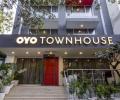
Currently, the company is present in over 259 Indian cities, with over 8,700 buildings (hotels and homes) and more than 173,000 rooms.

'Co-living is a phenomenon that is bound to strike the right chord with young people everywhere and India will lead the charge as the testing ground for all such ideas.'

Oyo has recently undergone large-scale corporate restructuring, setting up several subsidiaries and bifurcating operations globally.

SoftBank-backed OYO now 100,000 rooms brand, eyes another 100,000 by Mar 1

As regular promotional discounts and offers rolled out by well-funded apps determine the demand trend, online hospitality aggregators face growing discontent from restaurants and hotels over commissions and pricing power.

'Customer expectation and need was quite limited when we started in 2013.' 'Now the expectation is little more and a lot of hard work is needed again.'
 © 2026 Rediff.com - Advertise with us - Disclaimer - Privacy Policy - Sitemap - Feedback - About us - Terms of use - Grievances