
Initially, the additional free benefit under the PMGKAY was provided for a period of three months (April-June 2020) to ameliorate distress caused by the COVID-19 pandemic. However, with the crisis continuing, the programme was extended for another five months (July-November 2020).

India has put curbs on wheat exports through the government route, starting November last year. This comes amid a surge in domestic prices of the cereal. In December, India exported 391 tonnes of wheat to Bangladesh and Bhutan. In November 2022, it had exported 375 tonnes of wheat only to Bhutan.

The Centre on Friday said it will sell 'Bharat Rice' in the retail market at Rs 29 per kg from next week to give relief to the common man and has also directed traders to disclose rice/paddy stock, as part of its efforts to control prices that have risen by around 15 per cent in the last one year. In a press conference, Union Food Secretary Sanjeev Chopra exuded confidence that these two measures along with the various restrictions of exports will help in cooling down the prices. Seeking to dispel market rumours, he categorically said the government has no plans to lift restrictions on rice exports any time soon.

The chief minister met Shah on Wednesday night and held discussions regarding the supply of rice to the state, for its Anna Bhagya scheme, which provides an additional 5 kg of rice for each member of below poverty line families.
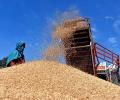
The government has no plans to import wheat as it has sufficient stocks to meet the country's requirements, official sources said. The Food Corporation of India (FCI) has enough stock for public distribution, they added. "There are no plans to import wheat into India. "The country has sufficient stocks to meet our domestic requirements," a source said.

The food ministry is likely to fix the selling price of wheat and rice lower than the current market price.
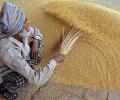
India has banned wheat exports with immediate effect as part of measures to control rising domestic prices, according to official notification. However, the export shipments for which irrevocable letters of credit (LoC) have been issued on or before the date of this notification will be allowed, the Directorate General of Foreign Trade (DGFT) said in a notification dated May 13. "The export policy of wheat ... is prohibited with immediate effect...," the DGFT said. It also clarified that wheat exports will be allowed on the basis of permission granted by the Government of India to other countries to meet their food security needs and based on the request of their governments.
India's opening stocks of wheat in the central pool are expected to be 19.5-20 million tonnes as on April 1, 2022, the lowest in the last three years, but much higher than the normative level required for maintaining a buffer and strategic reserve, trade and market sources said. In accordance with the buffer and strategic reserve norms, India should have a wheat stock of 7.5 million tonnes in the central pool as on April 1 each year and this year's stocks, though the lowest in the last three years, will still be over 160 per cent more than what is required. On the export front, both government and trade sources are unanimous that this year (FY22) they will be 7-7.25 million tonnes, a record, while in the next financial year, they might touch even 10 million tonnes if the current momentum is maintained.

The government on Monday ruled out the possibility of free food-grains distribution to migrants saying there is no panic situation and no complete national lockdown unlike last year.

The union government may reduce the price of wheat and rice it plans to sell in the open market to check food inflation, after an earlier sale received poor response possibly due to high rates quoted by it.
 © 2026 Rediff.com - Advertise with us - Disclaimer - Privacy Policy - Sitemap - Feedback - About us - Terms of use - Grievances