
Indian drugmakers Eris Lifesciences, Wockhardt and Lupin are prepping to cash in when Danish company Novo Nordisk bows out of the human insulin pen market by the end of this year and creates an opportunity estimated to be worth Rs 600-800 crore in the domestic market. Some self-use disposable pens are pre-filled with insulin and others can be reused with new cartridges.

The National Pharmaceutical Pricing Authority will monitor how companies are increasing prices of non-scheduled drugs.

Industry associations and companies in the United States, including the US Chamber of Commerce, Coalition of Services Industries and the iconic bike company Harley Davidson have called on the Donald Trump dispensation to push India to reduce tariffs, non-tariffs, and regulatory barriers to boost American exports.

Anti-infectives like Ivermectin, Mupirocin and Meropenem have also been added to the list, taking the total drugs under it to 384.

The government has been stringent with pricing changes. Prices of 651 essential medicines came down from April 1, 2023 by 6.73 per cent with the government capping ceiling prices of these drugs.

For the consumer, there would be practically no impact on prices of essential medicines this year.


Abbott India outperformed the Indian pharmaceutical market (IPM) with a year-on-year (YoY) growth of 23 per cent in February. The domestic market grew at a robust 20 per cent on a low base, primarily led by volume growth and price hikes. Abbott continued to outperform the sector in the anti-diabetic space with a growth of 20 per cent and key brands such as Thyronorm (hypothyroidism), biliary agent Udiliv, insulin Ryzodeg posted robust growth.

While extending the National List of Essential Medicines will help patients, care has to be taken to ensure this does not lead to a slowdown of production as has happened in case of DPCO drugs.
Notwithstanding the fact that the country's pharmaceutical (pharma) pricing regulator has allowed a 12 per cent price increase for medicines listed under the National List of Essential Medicines (NLEM) in 2023, analysts and industry insiders predict that the overall domestic pharma industry will only witness a price hike of 5-6 per cent. This is attributed to higher competitive intensity in the market. Krishnakumar V, executive director and chief operating officer (CEO) of Eris Lifesciences, a domestic-focused pharma company, noted that the NLEM segment experienced growth suppression of around 150 basis points due to price reductions during the January to July period this year.
In contrast with their strong performance in 2020 and 2021, pharmaceutical and healthcare funds experienced a decline in 2022, with returns plummeting by an average 9.8 per cent. This trend has continued in the current year, with year-to-date return remaining in the negative (-4.9 per cent). In the past three months, pharma funds have been hit hard, experiencing a 7.9 per cent decline.
As many as 34 new drugs were added to and 26 dropped from an updated list of essential medicines on Tuesday, with the government saying this will reduce "patients' out-of-pocket expenditure". The National List of Essential Medicines (NLEM 2022) has 384 drugs, up from 376 in 2015. "Drafting this list is a lengthy process, and around 350 experts from across India have held over 140 consultation meetings to draft the NLEM 2022," Union Health Minister Mansukh Mandaviya said.
Hospitals to recover from sluggish Q3; diagnostics' growth rate at pre-Covid levels.

Eight commonly prescribed anti-cancer drugs will soon enter India's National List of Essential Medicines (NLEM).

The eight-member expert committee, which is in charge of revising NLEM, plans inclusion of new drugs to the list and also do away with the current practice of including only specific strengths of medicines in NLEM.

The government has begun work on expanding the country's National List of Essential Medicines, which was last revised in 2003.
The Union ministry of chemicals and fertilisers has initiated a move to bring all essential medicines sold in the country under a price cap.
Over 300 life-saving medicines may become cheaper by at least 25 per cent, if the finance ministry considers a proposal by its chemicals and fertilisers counterpart to provide customs and excise duty waivers on all drugs that are part of the National List of Essential Medicines. The chemicals and fertilisers ministry proposal has been supported by pharma companies, who have also agreed to pass on the benefits of such waivers by slashing retail prices.
It is estimated that over 95 per cent of drugs being produced in India are off-patent and would not be affected by introduction of product patent,

The National Pharmaceutical Pricing Authority has decided to have one price for basic utility condoms and the other for pleasure condoms.

In a relief to pharma majors, the Delhi high court today held as "illegal and unsustainable" the Centre's decision to put a ceiling on the price of condoms, including the luxury variety.
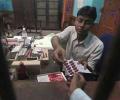
In May, price growth for drugs was in negative territory at (-)1 per cent

The drug pricing regulator on Tuesday said it will fix the ceiling prices of over 300 medicines by the end of this month, a move that will come as a major relief to patients.

I got to know that every referred case for angiography and angioplasty got a kickback of Rs 5,000 and Rs 15,000 respectively. Seeing this trend, doctors started paying referring doctors Rs 1 lakh in advance and adjusting it as and when patients came in. This menace slowly spread its tentacles all over the medical field, including radiological diagnostics and biochemistry laboratories. For every test ordered, 20 per cent of the bill was given back to the referring doctor. This led to doctors recommending unnecessary tests. The pharmaceutical companies also saw burgeoning business. Acclaimed doctors were given televisions sets, refrigerators, air conditioners and cars depending upon the prescriptions. General practitioners would prescribe unnecessary drugs, and were given returns in cash. A fascinating excerpt from Dr Upendra Kaul's When The Heart Speaks.

With these 18 drugs, the government now has brought in 467 medicines under the price control.

The intention of the government is to cap prices of drugs that are essential and which the public widely uses.

Drug major Novartis has been slapped with a Rs 300-crore penalty by drug regulator NPPA for overcharging consumers on sale of Voveran, its best-selling painkiller medicine.

The government said that "in exercise of extraordinary powers in public interest, conferred by paragraph 19 of the DPCO, 2013", the ceiling prices of 21 key formulations had been increased. These formulations include common medicines like BCG vaccines, penicillin, malaria and leprosy medicines (Dapsone), life-saving drugs like Furosemide (used to treat fluid build-up due to heart failure, liver scarring, or kidney disease), vitamin C, some common antibiotics, and anti-allergy medicines.
Overall slowdown in the economy and growing volumes of unbranded generic medicines in the domestic market are behind poor sales.

Ties between India and the United States have been strained in recent years because of trade policies and patent disputes.

Drugs under exemption make up roughly 95 per cent of the antiretrovirals used by India's AIDS patients

Hit by the new drug pricing policy and regulatory interventions, growth rate of the Rs 72,069-crore Indian pharmaceutical market has slowed down to 9.8 per cent in 2013 as compared to 16.6 per cent in 2012, says a report.

Increased price control over branded generic medicines has affected its profitability
At least two key drugs in the gliptin category have already gone off patent and cheaper variants are crowding the market. Also, several patent expiries are round the corner for the newest category of drugs - SGLT-2 inhibitors or gliflozins.

NPPA suggests expanding the list of essential medicines whose prices are controlled

To keep price control to a minimum, the government can act in two areas where it has not done so far.
 © 2026 Rediff.com - Advertise with us - Disclaimer - Privacy Policy - Sitemap - Feedback - About us - Terms of use - Grievances