
Delhi should keep all its options open in what is essentially a transitional period in the geopolitics of energy rather than remain a gatekeeper serving Trump's 'America First', suggests Ambasssador M K Bhadrakumar.

India has firmly denied allegations that the US Navy is using its ports to launch attacks against Iran, reaffirming its commitment to strategic autonomy and non-alignment in international conflicts.

India and the US have signed a framework agreement for defence cooperation for the next 10 years, enhancing their partnership and aiming for regional stability.
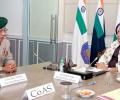
India and the US have agreed to work together to draft a comprehensive framework on defence cooperation, aimed at structuring the bilateral collaboration for the 2025-2035 period. The framework will cover multiple domains in land, air, maritime and space, and will focus on intelligence, logistics, operational and industrial engagement. The agreement comes ahead of Prime Minister Narendra Modi's planned trip to Washington, where he is expected to meet with US President Donald Trump to discuss boosting India-US cooperation in the areas of trade, energy and defence.

Reports (not denied by India) that the USA had 'for the first time provided real-time details to their Indian counterparts on the Chinese positions and force strength in advance of a PLA incursion' into Tawang at the LAC in December 2022, helping India thwart China's expansionist designs, show how operationally effective the USA-India friendship has become on the ground. A engaging excerpt from Sreeram Chaulia's must-read new book, Friends: India's Closest Strategic Partners.
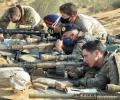
The 18th edition of exercise Yudh Abhyas is scheduled to take place from October 14 to 31, sources in the defence and military establishment said on Wednesday.

Gen Kenneth S Wilsbach, commander of the US Pacific Air Forces, said the US side held the interaction behind closed doors with most of the air chiefs of the region.

The armies of India and the US on Tuesday began an over two-week mega military exercise at a military facility in Uttarakhand with the aim of exchanging best practices and tactics in sync with growing defence ties between the two countries.
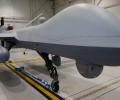
The defence ministry on Thursday accorded its approval to procure 30 MQ-9B Predator drones from the US to crank up the surveillance apparatus of the armed forces, especially along the frontier with China, people familiar with the development said.

The American platforms at the exercise 'Cope India' that started off Kalaikunda will also include a fleet of F-15 E fighter jets, C-130 and C-17 transport aircraft.

New Delhi had proposed during the 2+2 dialogue in April that the US navy could avail of the services and expertise of Indian shipyards.
India and the United States have signed an agreement for cooperation in the development of Air-Launched Unmanned Aerial Vehicle (ALUAV), in yet another step to further expand bilateral defence and military cooperation.

It is believed that the signing of BECA and the follow-up arrangements between the sides will allow India to use American inputs on geospatial intelligence and to enhance military accuracy of automated hardware systems and weapons like cruise, ballistic missiles and drones.

The US remained "watchful" over developments along India's frontier with China as it cannot take its eyes off the regional security issues, a senior American official said on Wednesday against the backdrop of the over 29-month border standoff in eastern Ladakh that has significantly frayed ties between the two neighbours.

GSOMIA does not cover the exchange of classified information with Indian private industry. Washington wanted this covered too, given New Delhi's emphasis on the proposed 'strategic partnership' model of procurement.

The US has deployed its naval carrier strike group, led by the nuclear-powered aircraft carrier USS Ronald Reagan, as well as a fleet of F-18 fighter jets and E-2C Hawkeye all-weather aircraft for the exercise, officials said. The Indian assets at the exercise included Jaguar and Sukhoi-30MKI fighter jets, IL-78 air-to-air refuelling tanker aircraft, Airborne Warning and Control System aircraft and warships Kochi and Teg. The Indian Navy has also deployed a fleet of P8I maritime surveillance aircraft and MiG 29K jets, apart from other platforms.
The two-plus-two dialogue will be held on Tuesday. A host of crucial bilateral, regional and global issues including China's efforts to expand influence in the Indo-Pacific region as well as its aggressive behaviour in eastern Ladakh is likely to figure in the talks.

The in-person talks are taking place at a time when India is locked in a tense standoff with China in eastern Ladakh and the Trump administration's growing friction with Beijing over a host of issues including trade tariff and the Chinese military's offensive manoeuvres in the South China Sea.
The new framework of the ministerial dialogue was initiated in order to provide a forward-looking vision for the strategic partnership between the two countries.

The talks between Singh and Esper came a day after Prime Minister Narendra Modi held a telephonic conversation with US President Donald Trump.

The Seventh Fleet's area of responsibility includes the Western Pacific and Indian Ocean and at any given time there are roughly 5070 ships and submarines, 140 aircraft and approximately 20,000 sailors under its command.

The agreement will allow sharing of high-end military technology, classified satellite data and critical information between the two countries.

Doval will meet US Defence Secretary James Mattis on March 24, Pentagon spokesman Capt Jeff Davis told reporters, adding that they are likely to discuss a wide range of bilateral security issues and those related to the defence relationship.

India, Japan and the US are set to focus on "anti-submarine warfare" by deploying "different machines" during the next round of their marine wargames named the Malabar Exercise, amidst increasing presence of Chinese underwater vessels in the strategic Indian Ocean region.
Severely critical of China, Pompeo, cited killing of Indian Army personnel in the Galwan Valley in eastern Ladakh in a clash with the Chinese military, and asserted that both India and the US are taking steps to strengthen cooperation against all threats and not just those posed by the Chinese Communist Party.
We do not know, because there has been no discussion, no transparency and most likely no real thinking on this matter at our end, observes Aakar Patel.
China's state-run media commented that India's close relationship with the US could create geopolitical rivalries in Asia.

Blinken and Indian leaders on Wednesday will discuss a plethora of pressing issues such as the fluid situation in Afghanistan, regional security concerns, COVID-19 response and ways to boost Indo-Pacific engagement, people familiar with the agenda of talks said.

US Secretary of State Antony Blinken was asked by US Congressmen if the US had explore the possibility of northwest India for counter terrorism capabilities in Afghanistan. Blinken's remarks on India assume great importance, observes Ambassador M K Bhadrakumar
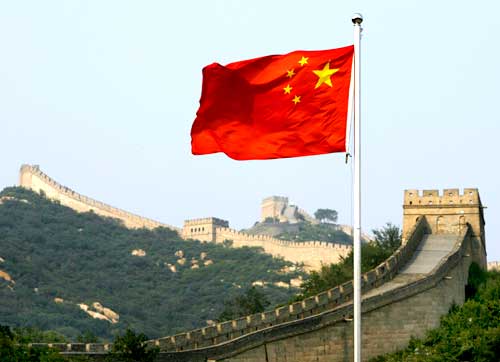
With Modi's visit, New Delhi hopes there will be breakthroughs in many aspects, especially business and trade, security cooperation and nuclear issues.

United States Defence Secretary Lloyd J Austin arrived in India on Friday on a three-day visit, aimed at further boosting bilateral defence and security ties in the wake of China's growing military assertiveness in the region including the Indo-Pacific.

On Tuesday, Pompeo and Esper will hold the 2+2 talks with External Affairs Minister S Jaishankar and Defence Minister Rajnath Singh, covering the entire expanse of defence and security ties as well as key regional and global issues.

We understand the electoral compulsions, the desperate need for the BJP to have at least 50 per cent of the Hindus vote for them in Uttar Pradesh in a few months. For that, you need polarisation, put your own Muslim compatriots on the 'other' side. This is how your domestic politics runs contrary to your national, strategic interest, warns Shekhar Gupta.

The text of the logistics defence agreement has not been made public at this point of time. But Pentagon Press Secretary Peter Cook and US Department of Defence spokesperson, Commander Gary Ross give a gist of what it's all about.

The elephant in the room will permeate the conversations, predicts Rup Narayan Das.

The time is ripe to extend the confrontation with the Chinese to the maritime domain, says former RA&W officer Krishan Varma.
Prime Minister Modi needs to call Biden next month and clearly say: 'Mr President, the threat from China is clear and present. We, in New Delhi, have determined it to be an urgent national priority to outfit our submarines and aircraft carriers with nuclear propulsion and we want to cooperate with America on this programme",' advises Ajai Shukla.

With the situation in Ladakh tense and no resolution in sight the trigger to take the India-US relationship to a transformational one is already there, observes Lieutenant General Syed Ata Hasnain (retd).

Japan could soon be the second country after the US with which India has a logistics support agreement. Besides the LSA, India and Japan may also sign a maritime domain awareness agreement which would enable the two navies to share information. For example, if a Japanese P-1 maritime patrol aircraft detects a Chinese submarine in the Indian Ocean, it would pass on the information to the Indian Navy, reveals Ajai Shukla.
With the signing of the pact, the Quad grouping of India, Japan, Australia and the US is set to gain more heft now, notes Dr Rajaram Panda.
 © 2026 Rediff.com - Advertise with us - Disclaimer - Privacy Policy - Sitemap - Feedback - About us - Terms of use - Grievances