
'Pakistan's only concern has been while they were on the FATF watch list was to distance their State institutions and organs from any direct connection with the actual execution of militancy inside Kashmir.'

The idea of weaponization got a fillip from an unexpected quarter. In the last week of October 1985, Rajiv met US President Ronald Reagan. Reagan told Rajiv, 'Pakistan has already made a bomb.' When Rajiv started talking about disarmament, the US president cut him short, 'Don't talk theory, think of your own protection.'

He was the army commander who planned Operation Bluestar. As army chief he planned Operation Brasstacks which rattled the Pakistan army. General K Sundarji was brilliant, ambitious and controversial, remembers Rahul Bedi.

General T N Raina was an iconic Indian military leader whose contributions to the nation should be more widely known, notes Lieutenant General Syed Ata Hasnain (retd).
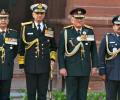
As India's international role expands, so must our capabilities, says Brigadier Gurmeet Kanwal (retd).
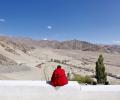
We should have anticipated it on August 5 last year, when we made the big changes in J&K. Amit Shah left nothing to chance when he told Parliament that 'we will bring back Aksai Chin even at the cost of our lives'. 'Then, there were the new maps, objections to the CPEC going through Indian territory, the weather reports.' A broad territorial status quo had existed in Ladakh-Aksai Chin since 1962. India made its intention to change this public, notes Shekhar Gupta.
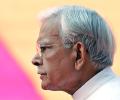
How seriously should we take Natwar Singh's book? Indeed how seriously should all such memoirs and autobiographies be taken? The answer, I imagine, depends on the intent. If the authors are merely settling scores, as many think Natwar Singh is, future historians would be entitled to ignore such autobiographies. But if there is no mens rea (guilty mind), so to speak, these books must be taken seriously, says T C A Srinivasa-Raghavan.
 © 2026 Rediff.com - Advertise with us - Disclaimer - Privacy Policy - Sitemap - Feedback - About us - Terms of use - Grievances