
Following an examination and discussions held in the aftermath of the United States' decision to withdraw from dozens of international organisations, Israel's Minister of Foreign Affairs, Gideon Sa'ar, has decided that Jerusalem will immediately sever all contact with several United Nations agencies and international bodies, citing what the government described as persistent bias, politicisation and actions hostile to Israel.

33 per cent of all road accidents and 35 per cent of fatal accidents took place on national highways and expressways.

The report showed that 53 road accidents take place every hour in the country.

'In 1984, Pyongyang just had one hotel and one could not move out without an official escort.' 'India was the only country with an embassy, apart from the socialist countries.'

'The politics that is now being played in Punjab doesn't contribute towards peace and tranquillity.'
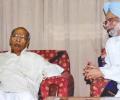
'Narasimha Rao asked me why China was doing so well in attracting foreign investments and I gave my frank opinion.' 'I told him that giving thrust to exports had to be a national effort.' 'But in India, the system was very centralised in the Government of India and the state governments had no role to play.'
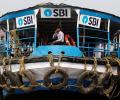
The Ministry of External Affairs (MEA) on March 17 had announced that State Bank of India (SBI) would extend a term loan of $1 billion to Sri Lanka, fully guaranteed by the Indian government, and this was part of India's financial aid to the troubled island nation. Ministry of External Affairs (MEA) spokesperson Arindam Bagchi was quoted saying by news agency PTI that the loan would be used for importing food, medicines, and other essential items. "India has always stood with the people of Sri Lanka and we will continue to extend all possible support at this juncture.

A low-pressure area, set to form over east central Bay of Bengal on May 22, is likely to intensify into a cyclonic storm and strike the Odisha-West Bengal coast on May 26, the Met department said on Thursday, sparking fears of another Amphan-like catastrophe.
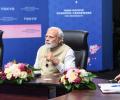
As US President Joe Biden launched a new trade deal with 12 Indo-Pacific nations, including India, to enhance trade, economic and investment opportunities, China, which sees the pact as a threat to its dominance in the region, went on the offensive against it, promising more opening up, while the official media here termed it as "economic Nato".

The UN Economic and Social Commission for Asia and the Pacific said ndia's growth has been slowing down since 2011, mainly on account of 'severe' monetary tightening by the Reserve Bank of India.

G20 needs to leverage its clout to play a more proactive role in stabilising food and fuel prices.

The growth outlook is higher than the Reserve Bank's projection of 8 per cent but at the lower end of the finance ministry's forecast of 8.25-8.75 per cent.

India has declined assistance offered by the United Nations of its integrated supply chain for COVID19-related material, saying the country has a "robust system" to deal with the required logistics, a spokesperson for UN Secretary General Antonio Guterres said.
Launching the annual survey of the UN Economic and Social Commission for Asia and the Pacific, Commerce and Industry Minister Kamal Nath said the government has started a 'revolution' in farming sector by waiving farm loans of Rs 60,000 crore. He said improving the agriculture sector is an important challenge for the Asia-Pacific region & deserves a 'serious response'. The report would open up solutions to the socio-economic issues across the region Nath said on the occasion.
"India's economy has entered into a 'new phase of high growth', with expansion of nine per cent forecast for 2008, buoyed by investment and savings amid increasing productive capacity," UN Economic and Social Commission for Asia and the Pacific (UN-ESCAP) survey released in New Delhi on Thursday said. Indian economy is expected to grow by 8.7 per cent during 2007-08 and many think-tanks expect moderation in growth in the coming fiscal.
A recession in the US and a steeper depreciation of the dollar will not have much impact on India, a United Nation Economic and Social Commission for Asia and the Pacific (Escap) report has said. On most other economics of the region, like Taiwan, South Korea and Singapore, the impact would be harsh, The Economic and Social Survey of Asia and the Pacific 2008 said.
The urban population of the Asia-Pacific region has been growing at the fastest rate in the world over the past 15 years, according to the Statistical Yearbook for Asia and the Pacific" released yesterday by the UN Economic and Social Commission. "This growth is having a knock-on effect," said Pietro Gennari, chief of ESCAP's Statistics Division. "We're seeing more and more people living in slums and also a negative effect on people's ability to access clean water.
The UNESCAP has warned Asia-Pacific region's governments to protect and prepare against sudden or unexpected market downturns rather than remaining complacent in the current atmosphere of prosperity.
A United Nations' body has called for greater public and private spending for upgrading critical areas of India's infrastructure, a key driver of the economy, and said a bulk of these investment need to be generated internally.
Nobel laureate Amratya Sen has been conferred Lifetime Achievement Award by UNESCAP as part of its 60th anniversary celebrations.
A staggering $600 billion a year is needed for infrastructure development in the entire Asia-Pacific region, the United Nations has estimated.
India's economy could prove to be the "most resilient" in the subregion of South and South-West Asia over the long term, according to a report by the UN, which says a positive but lower economic growth post COVID-19 pandemic and the country's large market will continue to attract investments. The report titled 'Foreign Direct Investment Trends And Outlook In Asia And The Pacific 2020/2021', and compiled by United Nations Economic and Social Commission for Asia and the Pacific (UNESCAP), stated that inward FDI flows to South and South-West Asia slightly decreased by 2 per cent in 2019, from $67 billion in 2018 to $66 billion in 2019. The growth, however, was mainly driven by India, which accounted for 77 per cent of the total inflows to the subregion and received $51 billion in 2019, up 20 per cent from the previous year.
"Can the revolution in the information technology sector in India resolve India's unemployment problems and the other ills in its labour markets? Certainly not," the Economic and Social Commission for Asia and the Pacific survey said.
India is likely to post an impressive growth of 7.2 per cent this year and 7.3 per cent next year despite an overall slowdown in Asia-Pacific region due to adverse effects of tsunami and oil price shocks, a United Nations report said on Monday.
Though foreign banks outperformed domestic banks in quality services, they could not match the latter as public sector banks reigned supreme on the strength of their superior reach.
India transformed from a moderate to low indebted country with a fall in debt-GDP ratio to 20 per cent and foreign debt was slated to be at $102.3 billion in March 2003, a United Nations survey said on Thursday.

The World Meteorological Organisation/Economic and Social Commission for Asia and the Pacific Panel on Tropical Cyclones, at its twenty-seventh session held in 2000 in Muscat, Oman, agreed to assign names to the tropical cyclones in the Bay of Bengal and Arabian Sea.
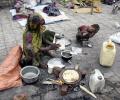
India has halved incidence of poverty from 1990s

A decade after a massive tsunami triggered by an earthquake smashed the coastline of around 14 nations; India on Friday announced a $1 million (around Rs 6 crore) contribution to a United Nations fund for strengthening early warning systems for natural disasters.
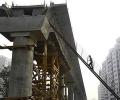
"India's economy is projected to sustain a 7.6 per cent growth rate in both fiscal years 2016-17 and 2017-18," says the year-end update of the flagship report Economic and Social Survey for Asia and the Pacific 2016 of the United Nations Economic and Social Commission for Asia and the Pacific (ESCAP).

Sri Lanka and southern India could continue to experience higher than normal rainfall and this could cause further flooding, particularly urban flooding, in certain locations, the report said.

The wide gap in national income held by the ultra-rich and the poor is striking.

Joseph Stiglitz accuses the US of negotiating over issues already settled at the World Trade Organization.

Since 2000, India has had three serious droughts.

South and South-West Asia could witness an economic growth of 5.3 per cent in 2015, which will be a four-year high.
 © 2026 Rediff.com - Advertise with us - Disclaimer - Privacy Policy - Sitemap - Feedback - About us - Terms of use - Grievances