
The Directorate of Revenue Intelligence (DRI) seized a large consignment of prohibited walkie-talkies and second-hand hard disk drives (HDDs) at Nhava Sheva Port, leading to the arrest of a father-son duo involved in the illegal import.

The government on Wednesday launched Rs 4,531 crore market access support (MAS) intervention scheme for a six-year period (FY26-31) to improve global reach, visibility and competitiveness of Indian exporters through 'structured and outcome-oriented' interventions.

Main imports from the neighbouring country during April-January 2024-25 included fruits and nuts (USD 0.08 million), certain oil seeds and medicinal plants (USD 0.26 million), and organic chemicals.

India has extended duty-free imports of urad for another year until March 31, 2026, according to a government notification. The provision was earlier in place until the end of March this year.

India's fresh restrictions on limiting access to Bangladeshi exports appear to be in response to Dhaka denying certain value-added items from the Northeast to enter that country through the land transit points.

A government official said India and the US are exploring an interim trade deal within 90 days.

Car restoration service provider Super Car Club Garage (SCCG), backed by Raymond chairman and managing director Gautam Singhania, has sought the Centre's green light for a licence to import foreign vehicles for restoration and subsequent re-export.

As the Union government explores ways to restrict import of laptops and other electronic devices starting with a 5 per cent reduction from the current level, it is working to ensure that there's no supply disruption in India even if an import cap is introduced, it is learnt. The caveat assumes significance in the context of the government's announcement of its plan in August 2023 to issue licences for import of select IT hardware products to reduce the country's dependence on China.

Withdrawing a blanket ban on overseas shipments of non-basmati white rice, the government on Saturday imposed a floor price of $490 per tonne and exempted the commodity from export duty. Exports of non-basmati white rice have been banned since July 20, 2023 to boost domestic supply. "The export policy for non-basmati white rice (semi-milled or wholly milled rice, whether or not polished or gazed) ...is amended from prohibited to free, subject to MEP (minimum export price) of $490 per tonne with immediate effect and until further orders," the directorate general of foreign trade (DGFT) said in a notification.
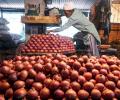
The government on Saturday lifted the ban on onion exports but imposed a minimum export price (MEP) of $550 per tonne, amid ongoing Lok Sabha elections in the country. Last night, the government imposed a 40 per cent duty on export of onions. In August last year, India had imposed a 40 per cent export duty on onions up to December 31, 2023.

The government on Friday scrapped a minimum price threshold that it had set previously for exports of onion as it looked to pass on the benefit of international glut to Indian farmers. The government had previously fixed a $550 per tonne as the minimum export price (MEP), which essentially meant farmers could not sell their produce overseas at lower than this rate.

The latest extension will allow Bhalla to stay in the post during the general elections due early next year.
The government has banned exports of onion till March next year with a view to increase domestic availability and to keep prices in check. "Export policy of onions... is amended from free to prohibited till March 31, 2024," the Directorate General of Foreign Trade (DGFT) said in a notification. Local vendors in the national capital are selling onions at Rs 70-Rs 80 per kg.

The government on Friday deferred the implementation of the import restriction order on laptops and computers (including tablet computers) by about three months till October 31, a move that gives more time to electronic companies to import these devices without a licence. Nw, these companies would need to take a licence from the government to import these devices from November 1. On August 3, the government put the import of these devices under a licence regime with immediate effect.
The government on Thursday imposed import restrictions on laptops, tablets, all-in-one personal computers, ultra small form factor computers, and servers with immediate effect. The Directorate General of Foreign Trade (DGFT) in a notification said exemption from import licensing is provided up to 20 items per consignment for R&D, testing, benchmarking and evaluation, repair and return and product development purposes.

The government has allowed the Enforcement Directorate to share information about economic offenders with 15 more agencies, including SFIO, CCI and NIA, a move that will expedite nailing of law-breakers. The finance ministry notified changes to the Prevention of Money Laundering Act (PMLA), 2002, on November 22. Through the notification, the Enforcement Directorate (ED), which deals primarily with cases of money laundering and violations of foreign exchange laws, would be able to share data with a total of 25 agencies, including the 10 specified earlier.
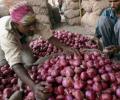
The government on Saturday imposed a minimum export price (MEP) of $800 per tonne on onion exports till December 31 this year with a view to increase availability of the vegetable in the domestic market and contain prices. The decision will come into effect from October 29. Besides, the government has also announced the procurement of additional 2 lakh tonnes of onion for the buffer, over and above the 5 lakh tonnes already procured.
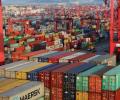
The decline in exports is mainly on account of poor demand in India's key destinations -- the Europe and the US -- and it may take some more months for the situation to improve. The demand scenario is "not looking very good as far as Europe is concerned, and the US also we have seen a decline in demand. "For the next 2-3 months, I think the demand scenario does not look very optimistic," DGFT (Director General of Foreign Trade) Santosh Kumar Sarangi told reporters.
Exports to India's key markets - the US, the United Arab Emirates, China, Singapore, Bangladesh and Germany - witnessed a sharp decline, resulting in a 12.69 per cent contraction in outbound shipments during the first month of the current financial year, commerce department data showed. India's biggest export market - the US - with 17 per cent share witnessed 17.16 per cent contraction at $5.9 billion in April. This was followed by the United Arab Emirates (UAE) that saw 22.09 per cent decline at $2.23 billion exports.

"Alcohol based hand sanitisers are prohibited for exports," directorate general of foreign trade said in a notification.

The government on Thursday banned exports of non-basmati white rice to boost domestic supply and keep retail prices under check during the upcoming festive season. There would be no change in export policy of par-boiled non-basmati rice and basmati rice, which forms the bulk of exports, the food ministry said in a statement. Non-basmati white rice constitutes about 25 per cent of total rice exported from the country.

India was looking at tapping new markets for import of edible oils, following the conflict between Ukraine and Russia, Union Finance Minister Nirmala Sitharaman said on Tuesday. According to her, the country was facing various hurdles on import of edible oils due to the conflict. "Everyone knows there is a war going on between Russia and Ukraine. There are various hurdles in terms of importing oils.

In an exclusive interview with PTI video, the minister also said an extensive risk-based analysis is done continuously to ensure the production of quality medicines in the country, and the government and regulators are always alert to ensure that no one dies due to spurious medicines.

The government on Thursday tweaked curbs on imports of laptops and computers as it allowed importers to bring in shipments of IT hardware from overseas on a mere 'authorisation' upon detailing quantity and value. The new 'import management system' is aimed at monitoring shipments of laptops, tablets and computers into the country without hurting market supply or creating a cumbersome licensing regime. The announcement is likely to provide relief to companies in the IT hardware segment in India as they had flagged concerns over the imposition of a strict licensing regime for importers.

Barely days after imposing a 40 per cent export tax on onions to cool down soaring prices, which, in turn, triggered widespread protests across the main growing belts, the Centre on Tuesday sought to mitigate both political and economic tensions gripping parts of Maharashtra. It decided to procure an additional 200,000 tonnes of onions at Rs 2,410 per quintal for its buffer stock from farmers, a rate that is strikingly close to the price at which they were being exported before the 40 per cent duty was levied on August 19. The export price before the imposition of the duty stood at around $320 per tonne free on board (approximately Rs 2,650 per quintal).

The government has decided to postpone the release of the new Foreign Trade Policy (FTP) and extend the existing one by six months on account of global uncertainties and currency fluctuations. The government was scheduled to announce the new FTP by the end of September. The current policy was to end on September 30.

The interim free trade agreement between India and Australia will come into force on Thursday, providing duty-free access to thousands of domestic goods such as textiles, and leather in the Australian market. The agreement will help almost double the bilateral commerce to $45-50 billion in around five years, according to exporters and industry players. The Economic Cooperation and Trade Agreement (ECTA), which was signed on April 2, would provide duty-free access to Indian exporters of over 6,000 broad sectors, including textiles, leather, furniture, jewellery and machinery in the Australian market.

After imposing 20 per cent export duty on non-basmati rice, the government has banned the export of broken rice with an aim to increase domestic availability, according to a government notification.

The Union government will soon make amendments to the foreign trade policy (FTP) to enable exporters to claim export benefits for settling trade in rupees. These benefits are, so far, available for export payments received in foreign currencies. After the Reserve Bank of India (RBI) unveiled a mechanism to settle international trade transactions in the local currency on Monday, exporters have been demanding that the Ministry of Commerce and Industry come up with a clarification on the matter.

In the national capital, onion prices were ruling at around Rs 40 per kilogram.

Thanks to an ambiguous law on the import of platinum alloys, some bullion importers are making big profits. A handful of them are importing refined gold cloaked as platinum alloy. Gold attracts 15 per cent import duty, as opposed to platinum alloy that invites a duty of 10.75 per cent. Industry sources say this is a case of mis-declaration and duty violation.

The government on Friday came out with Foreign Trade Policy (FTP) 2023 which seeks to boost the country's exports to $2 trillion by 2030 by shifting from incentives to remission and entitlement based regime. Unlike the practice of announcing 5-year FTP, the latest policy has no end date and will be updated as and when needed, said Director General of Foreign Trade (DGFT) Santosh Sarangi while briefing media about FTP 2023. Earlier, Commerce and Industry Minister Piyush Goyal unveiled FTP 2023 which will come into effect from April 1, 2023.
To set up a future-ready administration geared towards the target of $2 trillion exports by 2030, the Department of Commerce has decided to set up a dedicated trade promotion body to drive overall promotion strategy, export targets, and execution as part of a restructuring exercise. The trade promotion body will formulate and drive overall trade promotion strategy; create and drive India's branding across focus markets and sectors; drive coordinated action across missions, states and export promotion councils; strategic initiatives, including advisory and buyer-seller meet; and develop digital platforms for exporters and buyers. Based on a 14-volume 'restructuring dossier' by the Boston Consulting Group, the commerce department has already implemented some of the recommendations.

The government on Wednesday extended the existing foreign trade policy (FTP) for six more months up to September 30 this year due to the Covid-19 pandemic, according to a notification. FTP provides guidelines for enhancing exports to push economic growth and create jobs. On March 31, 2020, the government had extended the Foreign Trade Policy 2015-20 for one year till March 31, 2021, amid the coronavirus outbreak and the lockdown.
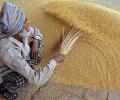
India has banned wheat exports with immediate effect as part of measures to control rising domestic prices, according to official notification. However, the export shipments for which irrevocable letters of credit (LoC) have been issued on or before the date of this notification will be allowed, the Directorate General of Foreign Trade (DGFT) said in a notification dated May 13. "The export policy of wheat ... is prohibited with immediate effect...," the DGFT said. It also clarified that wheat exports will be allowed on the basis of permission granted by the Government of India to other countries to meet their food security needs and based on the request of their governments.
The government may roll out a new foreign trade policy (FTP) of a shorter term of two-three years in a bid to keep pace with the fast-evolving scenarios in international trade which have been triggered by recent disruptions, such as the pandemic and the Russia-Ukraine war. An FTP is an elaborate policy guideline and strategy to promote the export of goods and services, with a duration of five years usually. The existing policy came into force on April 1, 2015, and was valid for five years, before multiple extensions.
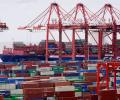
The country's exports for the first time crossed the $400 billion mark in a fiscal on healthy performance by sectors such as petroleum products, engineering, gems and jewellery, and chemicals, according to the commerce ministry's data released on Wednesday. The merchandise exports rose by by 37 per cent to $400.8 billion in 2021-22 until March 21 against $292 billion in 2020-21. Previously, the outbound shipments had touched a record of $330.07 billion in 2018-19.

The government on Tuesday imposed restrictions on sugar exports from June 1, a move aimed at increasing availability of the commodity in the domestic market and curbing price rise. "Export of sugar (raw, refined and white sugar) is placed under restricted category from June 1, 2022 onwards," the Directorate General of Foreign Trade (DGFT) said in a notification. However, it said that these restrictions would not be applicable on sugar being exported to the EU and the US under CXL and TRQ. A specified amount of sugar is exported to these regions under CLX and TRQ.

The current total installed capacity of the seven manufacturers of remdesivir is 38.80 lakh vials per month, the Ministry of Chemicals and Fertilizers said in a statement.

US President Donald Trump thanked PM Modi for lifting curbs on the export of hydroxychloroquine.
 © 2026 Rediff.com - Advertise with us - Disclaimer - Privacy Policy - Sitemap - Feedback - About us - Terms of use - Grievances